
UNITED STATES
SECURITIES AND EXCHANGE COMMISSION
Washington, DC 20549
FORM
CURRENT REPORT
Pursuant to Section 13 or 15(d)
of the Securities Exchange Act of 1934
Date of Report (Date of earliest event reported):
(Exact name of registrant as specified in its charter)
| (State or other jurisdiction of incorporation or organization) |
(Commission File Number) | (I.R.S. Employer Identification No.) |
|
|
||
| (Address of principal executive offices) | (Zip Code) |
Registrant’s telephone number, including
area code: (
(Former name or former address, if changed since last report)
Check the appropriate box below if the Form 8-K filing is intended to simultaneously satisfy the filing obligation of the registrant under any of the following provisions (see General Instruction A.2. below):
| Written communications pursuant to Rule 425 under the Securities Act (17 CFR 230.425) | |
| Soliciting material pursuant to Rule 14a-12 under the Exchange Act (17 CFR 240.14a-12) | |
| Pre-commencement communications pursuant to Rule 14d-2(b) under the Exchange Act (17 CFR 240.14d-2(b)) | |
| Pre-commencement communications pursuant to Rule 13e-4(c) under the Exchange Act (17 CFR 240.13e-4(c)) |
Securities registered pursuant to Section 12(b) of the Act:
| Title of Each Class | Trading Symbol | Name of Exchange on Which Registered | ||
Indicate by check mark whether the registrant is an emerging growth company as defined in Rule 405 of the Securities Act of 1933 (§230.405 of this chapter) or Rule 12b-2 of the Securities Exchange Act of 1934 (§240.12b-2 of this chapter).
Emerging growth company
If an emerging growth company, indicate by check mark if the registrant
has elected not to use the extended transition period for complying with any new or revised financial accounting standards provided pursuant
to Section 13(a) of the Exchange Act.
| Item 2.02 | Results of Operations and Financial Condition |
On August 12, 2026, Century Therapeutics, Inc. (the “Company”) issued a press release announcing its financial results for the quarter ended June 30, 2026. A copy of the press release is furnished as Exhibit 99.1 to this Current Report on Form 8-K and is incorporated herein by reference.
The information contained in this Item 2.02 (including Exhibit 99.1) is being furnished and shall not be deemed “filed” for purposes of Section 18 of the Securities Exchange Act of 1934, as amended (the “Exchange Act”), or otherwise subject to the liabilities of that section and shall not be deemed to be incorporated by reference in any filing under the Securities Act of 1933, as amended, or the Exchange Act, except as shall be expressly set forth by specific reference in such filing.
| Item 7.01 | Regulation FD Disclosure |
On August 12, 2026, the Company updated information reflected in a slide presentation, which is attached as Exhibit 99.2 to this Current Report on Form 8-K and is incorporated herein by reference. Representatives of the Company will use the updated presentation in various meetings with investors from time to time.
The information contained in this Item 7.01 (including Exhibit 99.2) is being furnished and shall not be deemed “filed” for purposes of Section 18 of the Exchange Act, or otherwise subject to the liabilities of that section and shall not be deemed incorporated by reference in any filing under the Securities Act or the Exchange Act, except as shall be expressly set forth by specific reference in such filing.
| Item 9.01 | Financial Statements and Exhibits |
(d) Exhibits
| Exhibit No. |
Document | |
| 99.1 | Press Release of Century Therapeutics, Inc., dated August 12, 2026 | |
| 99.2 | Investor Presentation of Century Therapeutics, Inc., dated August 12, 2026 | |
| 104 | Cover Page Interactive Data File (embedded within the Inline XBRL document) |
SIGNATURES
Pursuant to the requirements of the Securities Exchange Act of 1934, the registrant has duly caused this report to be signed on its behalf by the undersigned hereunto duly authorized.
| CENTURY THERAPEUTICS, INC. | ||
| By: | /s/ Brent Pfeiffenberger, Pharm.D., M.B.A. | |
| Name: | Brent Pfeiffenberger, Pharm.D., M.B.A. | |
| Title: | President, Chief Executive Officer and Chairman of the Board of Directors | |
Date: August 12, 2026
Exhibit 99.1
Century Therapeutics Reports Second Quarter 2026 Financial Results and Business Updates
| · | Completed pre-IND meeting with the FDA for CNTY-813, an iPSC-derived islet replacement therapy with functional cure potential in type 1 diabetes (T1D); IND submission on track for 4Q 2026 |
| · | CNTY-813 preclinical data from oral presentation at ADA 2026 showed durable glucose control in vivo, immune evasion, and manufacturing success at clinical scale, advancing its potential as a functional cure for T1D |
| · | Upcoming oral presentations at European Association for the Study of Diabetes (EASD 2026) and Breakthrough T1D® Clinical & Research Congress 2026 highlighting CNTY-813 |
| · | Company remains on track to advance CNTY-308, a CD19-targeted CAR-iT cell therapy with Allo-EvasionTM 5.0 into the clinic this year |
| · | Cash runway into 1Q 2029 with cash, cash equivalents, and investments of $197.2 million as of June 30, 2026 |
PHILADELPHIA, August 12, 2026 –– Century Therapeutics, Inc. (‘Century’, NASDAQ: IPSC), a biotechnology company developing induced pluripotent stem cell (iPSC)-derived cell therapies for autoimmune diseases, including T1D, and cancer, today reported financial results for the second quarter ended June 30, 2026, and recent business highlights.
"We are executing with speed against key development milestones, reinforcing our confidence in delivering on our ambition to transform diseases like T1D by creating functional cures at scale," said Brent Pfeiffenberger, Pharm.D., Chief Executive Officer of Century Therapeutics. "With CNTY-813, our preclinical data at ADA 2026 continue to support its potential as a functional T1D cure, and we have established our Phase 1 manufacturing process, demonstrating consistent product quality across independent batches. Our recent pre-IND meeting with the FDA builds on that progress yielding alignment with the FDA on our nonclinical data package, manufacturing strategy, and proposed Phase 1/2 trial design, keeping CNTY-813's IND submission on track for the fourth quarter of 2026. In addition, CNTY-308 remains on track to enter the clinic in 2026."
Second Quarter 2026 and Recent Highlights
Pre-IND meeting with the FDA supports regulatory and initial clinical path for CNTY-813
| · | Following a recent pre-IND meeting with the FDA, Century remains on track to submit an IND for CNTY-813 in the fourth quarter of 2026. |
| · | Century and the FDA reached general alignment on the nonclinical data package, the proposed Phase 1 manufacturing process and the Phase 1/2 clinical trial design which includes alignment on: |
| o | GLP toxicology study, which is ongoing and on track to support the planned submission. |
| o | Phase 1 manufacturing process and testing plan that includes cell bank, intermediate, and final drug product release tests. |
| o | Proposed Phase 1/2 clinical trial including dosing and patient eligibility criteria. |
| · | New preclinical data further support CNTY-813 as a potential functional cure for T1D; data were presented at the 2026 American Diabetes Association (ADA) Scientific Sessions in June (link to press release HERE). |
Data demonstrated key advancements for CNTY-813 including:
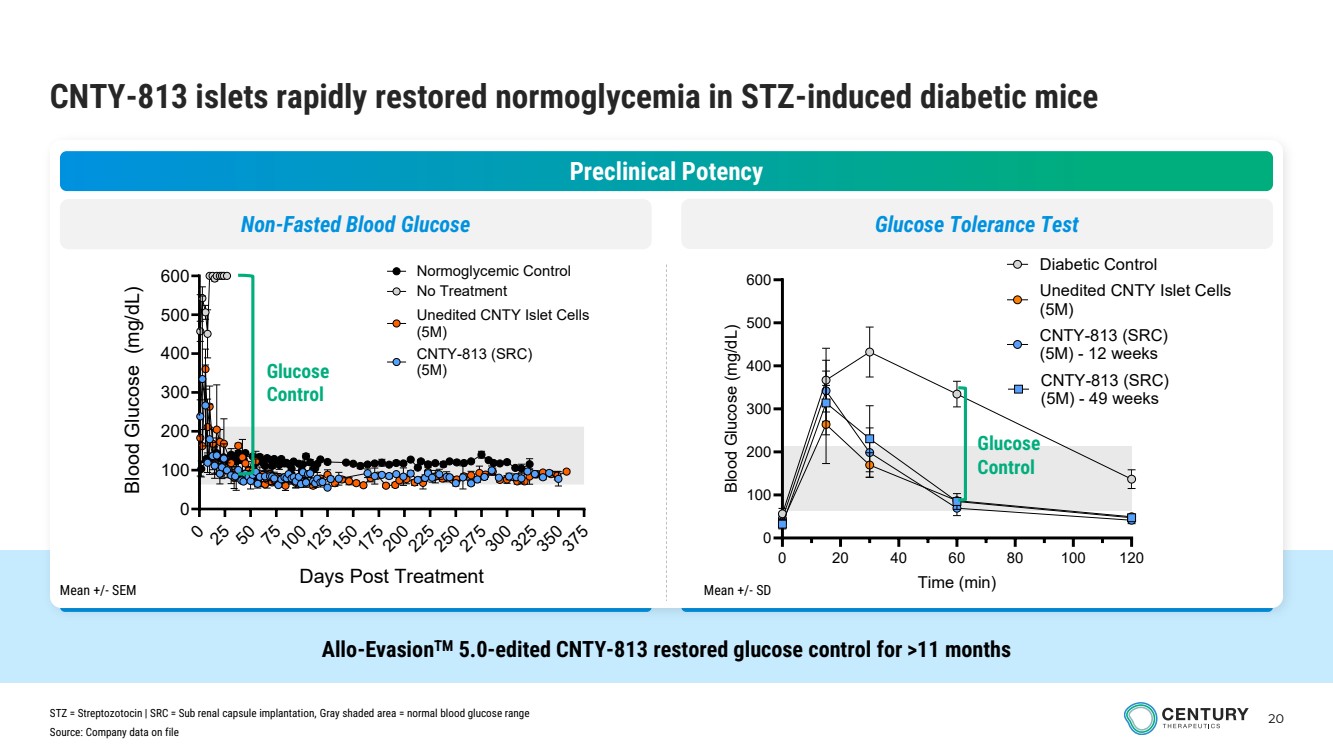
| o | Durable in vivo glucose control maintained for more than eight months and immune evasion under allogeneic immune pressure without immunosuppression. |
| o | Consistent and scalable product quality and performance at Phase 1 clinical trial scale. |
| · | IND submission remains on track for 4Q 2026, with initial clinical data expected in 2H 2027. |
CNTY-813 Phase 1 manufacturing process established
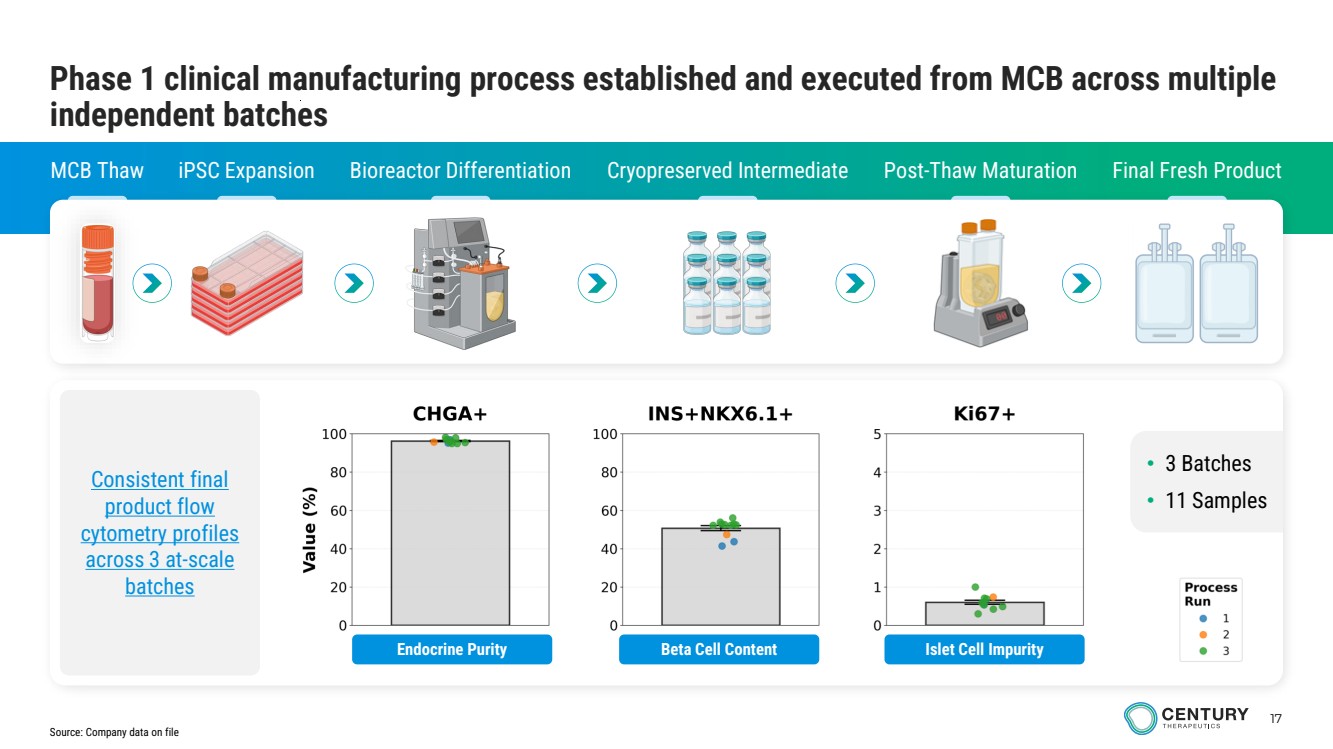
| · | Century has established its Phase 1 clinical manufacturing bioreactor process for CNTY-813, demonstrating consistent process performance and product quality, endocrine purity, and optimal islet cell content across independent batches run at the same scale intended for the Phase 1 clinical trial. |
CNTY-813 preclinical data selected for oral presentations at congresses this fall
| · | 62nd Annual Meeting of the European Association for the Study of Diabetes (EASD 2026; Milan, Italy; Presentation #225, Paris Hall, October 2nd, 2026, 10-11 AM CEST) |
| · | Breakthrough T1D® Clinical & Research Congress 2026 (CRC 2026; Philadelphia, Pennsylvania; Presentation #341, Hall 1, October 9th, 2026, 3:50- 4:50 PM EST) |
| · | Both presentations will highlight CNTY-813, Century's iPSC-derived islet replacement therapy program engineered with Allo-Evasion™ 5.0 for patients with T1D. |
CNTY-308 clinical trial planned to initiate in 2026
| · | Century remains on track, after aligning on nonclinical, manufacturing and Phase 1 clinical trial parameters with health authorities, to complete IND-enabling activities for CNTY-308, a CD19-targeted CD4⁺/CD8⁺ αβ CAR-iT cell therapy engineered with Allo-Evasion™ 5.0 for B-cell-mediated diseases. CNTY-308 is anticipated to enter the clinic in 2026. |
| · | Preclinical data showed functional comparability to primary CAR-T cells, including target-driven proliferation, cytokine secretion, and durable persistence. Collectively, these results and the expanding clinical validation of CAR-T therapy support Century’s confidence that CNTY-308 could deliver autologous-like benefits in an allogeneic, patient-centric format designed to broaden access. |
Second Quarter 2026 Financial Results
| · | Cash Position: Cash, cash equivalents, and investments were $197.2 million as of June 30, 2026, as compared to $117.1 million as of December 31, 2025. The company estimates its cash, cash equivalents, and investments as of June 30, 2026 will support operations into 1Q 2029. |
| · | Research and Development (R&D) Expenses: R&D expenses were $19.6 million for the quarter ended June 30, 2026, compared to $26.9 million for the same period in 2025. The decrease was primarily the result of a reduction in personnel and a reduction in facility costs as a result of our previously announced portfolio prioritization. |
| · | General and Administrative (G&A) Expenses: G&A expenses were $5.8 million for the quarter ended June 30, 2026, compared to $7.8 million for the same period in 2025. |
| · | Net Income (Loss): Net (loss) was $34.6 million for the quarter ended June 30, 2026, compared to net (loss) of $32.5 million for the same period in 2025. |
About Century Therapeutics
Century Therapeutics (NASDAQ: IPSC) is a biotechnology company advancing a pipeline of induced pluripotent stem cell (iPSC)-derived cell therapies with the potential to meaningfully address autoimmune diseases, including type 1 diabetes, and cancer. Century’s therapies are derived from its iPSC cell foundry and leverage its novel immune evasion engineering technology, Allo-Evasion™. Century believes its approach to developing off-the-shelf cell therapies will expand patient access and provide advantages over existing cell therapies which will ultimately advance the course of care. For more information on Century Therapeutics, please visit www.centurytx.com and connect with us on LinkedIn.
Forward-Looking Statements
This press release contains forward-looking statements within the meaning of, and made pursuant to the safe harbor provisions of, The Private Securities Litigation Reform Act of 1995. All statements contained in this press release, other than statements of historical facts or statements that relate to present facts or current conditions, including but not limited to, statements our timing and expectations regarding our preclinical and clinical development programs, including their planned development, therapeutic potential and market opportunity, ongoing and planned regulatory submissions and interactions, the achievement of developmental milestones, corporate strategies, anticipated data readouts, and our financial resources and expected cash runway are forward-looking statements. These statements involve known and unknown risks, uncertainties and other important factors that may cause our actual results, performance, or achievements to be materially different from any future results, performance or achievements expressed or implied by the forward-looking statements. In some cases, you can identify forward-looking statements by terms such as “may,” “might,” “will,” “should,” “expect,” “plan,” “aim,” “seek,” “anticipate,” “could,” “intend,” “target,” “project,” “contemplate,” “believe,” “estimate,” “predict,” “forecast,” “potential” or “continue” or the negative of these terms or other similar expressions. The forward-looking statements in this press release are only predictions. We have based these forward-looking statements largely on our current expectations and projections about future events and financial trends that we believe may affect our business, financial condition, and results of operations. These forward-looking statements speak only as of the date of this press release and are subject to a number of risks, uncertainties and assumptions, some of which cannot be predicted or quantified and some of which are beyond our control, including, among others: our ability to successfully advance our current and future product candidates through development activities, preclinical studies, and clinical trials; our ability to meet development milestones on anticipated timelines; uncertainties inherent in the results of preliminary data, pre-clinical studies and earlier-stage clinical trials, which may not be predictive of final results or the results of later-stage clinical trials; our ability to obtain clearance of our future IND or CTA submissions and commence and complete clinical trials on expected timelines, or at all; our reliance on the maintenance of certain key collaborative relationships for the manufacturing and development of our product candidates; the timing, scope and likelihood of regulatory filings and approvals, including final regulatory approval of our product candidates; the impact of geopolitical issues, trade disputes and tariffs, banking instability and inflation on our business and operations, supply chain and labor force; the performance of third parties in connection with the development of our product candidates, including third parties conducting our clinical trials as well as third-party suppliers and manufacturers; our ability to successfully commercialize our product candidates and develop sales and marketing capabilities, if our product candidates are approved; our ability to recruit and maintain key members of management and our ability to maintain and successfully enforce adequate intellectual property protection. These and other risks and uncertainties are described more fully in the “Risk Factors” section of our most recent filings with the Securities and Exchange Commission and available at www.sec.gov. You should not rely on these forward-looking statements as predictions of future events. The events and circumstances reflected in our forward-looking statements may not be achieved or occur, and actual results could differ materially from those projected in the forward-looking statements.
Moreover, we operate in a dynamic industry and economy. New risk factors and uncertainties may emerge from time to time, and it is not possible for management to predict all risk factors and uncertainties that we may face. Except as required by applicable law, we do not plan to publicly update or revise any forward-looking statements contained herein, whether as a result of any new information, future events, changed circumstances or otherwise.
For More Information:
Century Therapeutics
Douglas Carr
Senior Vice President, Finance
investor.relations@centurytx.com
Corey Davis, Ph.D.
LifeSci Advisors,
LLC 212-915-2577
cdavis@lifesciadvisors.com
Century Therapeutics, Inc.
Condensed Balance Sheets
(unaudited, in thousands)
| June 30, 2026 | December 31, 2025 | |||||||
| Assets | ||||||||
| Current assets | ||||||||
| Cash and cash equivalents | $ | 49,642 | $ | 61,853 | ||||
| Short-term investments | 70,070 | 55,261 | ||||||
| Prepaid expenses and other current assets | 5,056 | 3,655 | ||||||
| Total current assets | 124,768 | 120,769 | ||||||
| Property and equipment, net | 34,482 | 50,026 | ||||||
| Operating lease right-of-use assets | 13,513 | 16,139 | ||||||
| Long-term investments | 77,477 | — | ||||||
| Intangible assets | 34,200 | 34,200 | ||||||
| Other long-term assets | 2,566 | 2,570 | ||||||
| Total assets | $ | 287,006 | $ | 223,704 | ||||
| Liabilities and stockholders’ equity | ||||||||
| Current liabilities | ||||||||
| Accounts payable | $ | 4,823 | $ | 4,773 | ||||
| Accrued expenses and other liabilities | 10,245 | 11,696 | ||||||
| Contingent consideration liability, short-term | — | 3,757 | ||||||
| Total current liabilities | 15,068 | 20,226 | ||||||
| Operating lease liability, long term | 34,626 | 40,241 | ||||||
| Other long-term liabilities | 666 | — | ||||||
| Deferred tax liability | 4,301 | 4,301 | ||||||
| Total liabilities | 54,661 | 64,768 | ||||||
| Common stock | 18 | 9 | ||||||
| Additional paid-in capital | 1,081,133 | 950,814 | ||||||
| Accumulated deficit | (848,112 | ) | (791,917 | ) | ||||
| Accumulated other comprehensive income | (694 | ) | 30 | |||||
| Total stockholders’ equity | 232,345 | 158,936 | ||||||
| Total liabilities and stockholders’ equity | $ | 287,006 | $ | 223,704 | ||||
Century Therapeutics, Inc.
Condensed consolidated statements of operations
(unaudited, in thousands, except share and per share amounts)
| Three Months Ended | Three Months Ended | Six Months Ended | Six Months Ended | |||||||||||||
| June 30, 2026 | June 30, 2025 | June 30, 2026 | June 30, 2025 | |||||||||||||
| Collaboration revenue | $ | — | $ | — | $ | — | $ | 109,164 | ||||||||
| Operating expenses | ||||||||||||||||
| Research and development | 19,595 | 26,859 | 36,700 | 53,439 | ||||||||||||
| General and administrative | 5,787 | 7,805 | 12,366 | 16,212 | ||||||||||||
| Loss on lease component termination | 11,145 | — | 11,145 | — | ||||||||||||
| Total operating expenses | 36,527 | 34,664 | 60,211 | 69,651 | ||||||||||||
| Income (loss) from operations | (36,527 | ) | (34,664 | ) | (60,221 | ) | 39,513 | |||||||||
| Interest income | 1,982 | 2,010 | 4,001 | 4,431 | ||||||||||||
| Other income (expense), net | (5 | ) | 113 | 15 | 75 | |||||||||||
| Total other income | 1,977 | 2,123 | 4,016 | 4,506 | ||||||||||||
| Net income (loss) | $ | (34,550 | ) | $ | (32,541 | ) | $ | (56,195 | ) | $ | 44,019 | |||||
| Unrealized loss on investments | (109 | ) | (222 | ) | (724 | ) | (241 | ) | ||||||||
| Comprehensive income (loss) | $ | (34,659 | ) | $ | (32,763 | ) | $ | (56,919 | ) | $ | 43,778 | |||||
| Net income (loss) per common share, basic and diluted | (0.17 | ) | (0.38 | ) | (0.28 | ) | 0.51 | |||||||||
| Weighted average common shares outstanding, basic | 205,778,156 | 86,238,084 | 199,660,522 | 86,130,235 | ||||||||||||
| Weighted average common shares outstanding, diluted | 205,778,156 | 86,238,084 | 199,660,522 | 86,207,666 | ||||||||||||
| Advancing Curative Medicines Through Cell Engineering August 2026 |
| 2 Forward-looking statements This presentation contains forward-looking statements within the meaning of, and made pursuant to the safe harbor provisions of, The Private Securities Litigation Reform Act of 1995. All statements contained in this presentation, other than statements of historical facts or statements that relate to present facts or current conditions, including but not limited to, statements our timing and expectations regarding our preclinical and clinical development programs, including their planned development, therapeutic potential and market opportunity, ongoing and planned regulatory submissions and interactions, the achievement of developmental milestones, corporate strategies, anticipated data readouts, and our financial resources and expected cash runway are forward-looking statements. These statements involve known and unknown risks, uncertainties and other important factors that may cause our actual results, performance, or achievements to be materially different from any future results, performance or achievements expressed or implied by the forward-looking statements. In some cases, you can identify forward-looking statements by terms such as “may,” “might,” “will,” “should,” “expect,” “plan,” “aim,” “seek,” “anticipate,” “could,” “intend,” “target,” “project,” “contemplate,” “believe,” “estimate,” “predict,” “forecast,” “potential” or “continue” or the negative of these terms or other similar expressions. The forward-looking statements in this presentation are only predictions. We have based these forward-looking statements largely on our current expectations and projections about future events and financial trends that we believe may affect our business, financial condition, and results of operations. These forward-looking statements speak only as of the date of this presentation and are subject to a number of risks, uncertainties and assumptions, some of which cannot be predicted or quantified and some of which are beyond our control, including, among others: Our ability to successfully advance our current and future product candidates through development activities, preclinical studies, and clinical trials; our ability to meet development milestones on anticipated timelines; uncertainties inherent in the results of preliminary data, pre-clinical studies and earlier-stage clinical trials, which may not be predictive of final results or the results of later-stage clinical trials; our ability to obtain clearance of our future Investigational New Drug (IND) or Clinical Trial Application (CTA) submissions and commence and complete clinical trials on expected timelines, or at all; our reliance on the maintenance of certain key collaborative relationships for the manufacturing and development of our product candidates; the timing, scope and likelihood of regulatory filings and approvals, including final regulatory approval of our product candidates; the impact of geopolitical issues, trade disputes and tariffs, banking instability and inflation on our business and operations, supply chain and labor force; the performance of third parties in connection with the development of our product candidates, including third parties conducting our clinical trials as well as third-party suppliers and manufacturers; our ability to successfully commercialize our product candidates and develop sales and marketing capabilities, if our product candidates are approved; our ability to recruit and maintain key members of management and our ability to maintain and successfully enforce adequate intellectual property protection. These and other risks and uncertainties are described more fully in the “Risk Factors” section of our most recent filings with the Securities and Exchange Commission and available at www.sec.gov. You should not rely on these forward-looking statements as predictions of future events. The events and circumstances reflected in our forward-looking statements may not be achieved or occur, and actual results could differ materially from those projected in the forward-looking statements. Moreover, we operate in a dynamic industry and economy. New risk factors and uncertainties may emerge from time to time, and it is not possible for management to predict all risk factors and uncertainties that we may face. Except as required by applicable law, we do not plan to publicly update or revise any forward-looking statements contained herein, whether as a result of any new information, future events, changed circumstances or otherwise. |
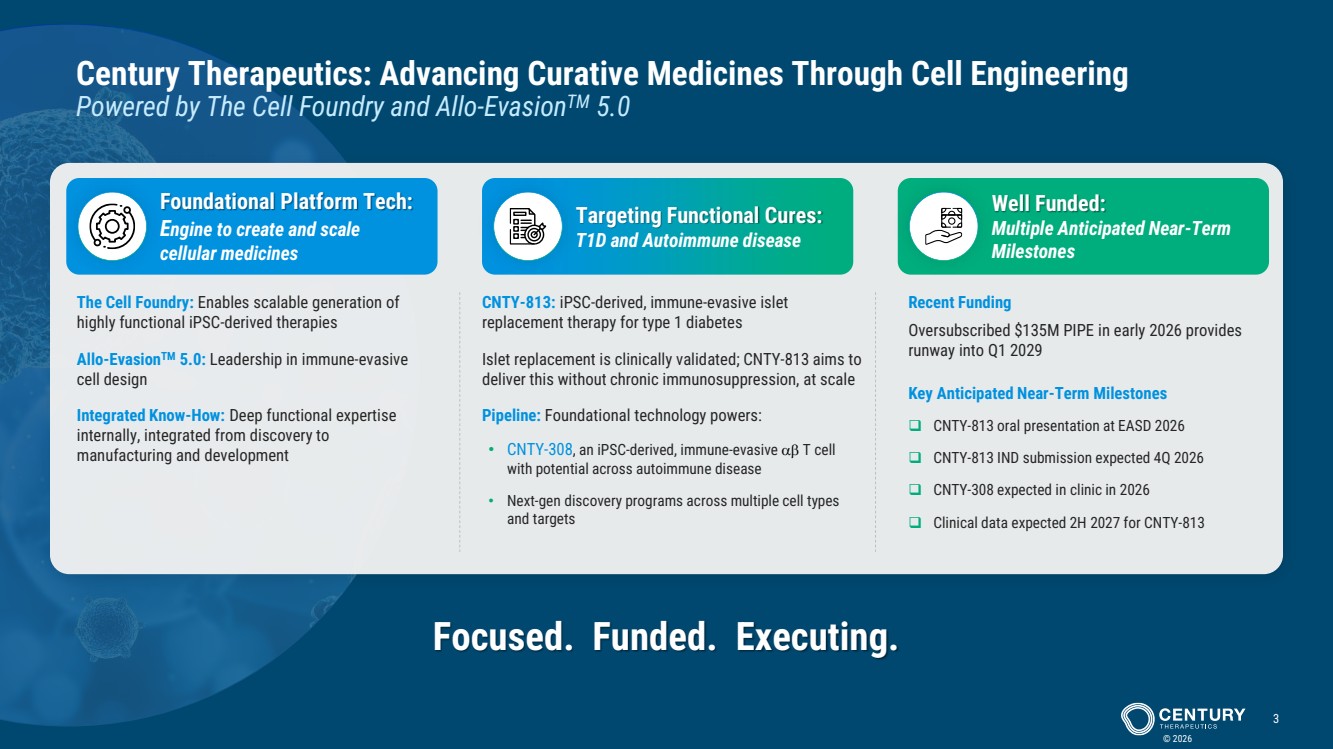
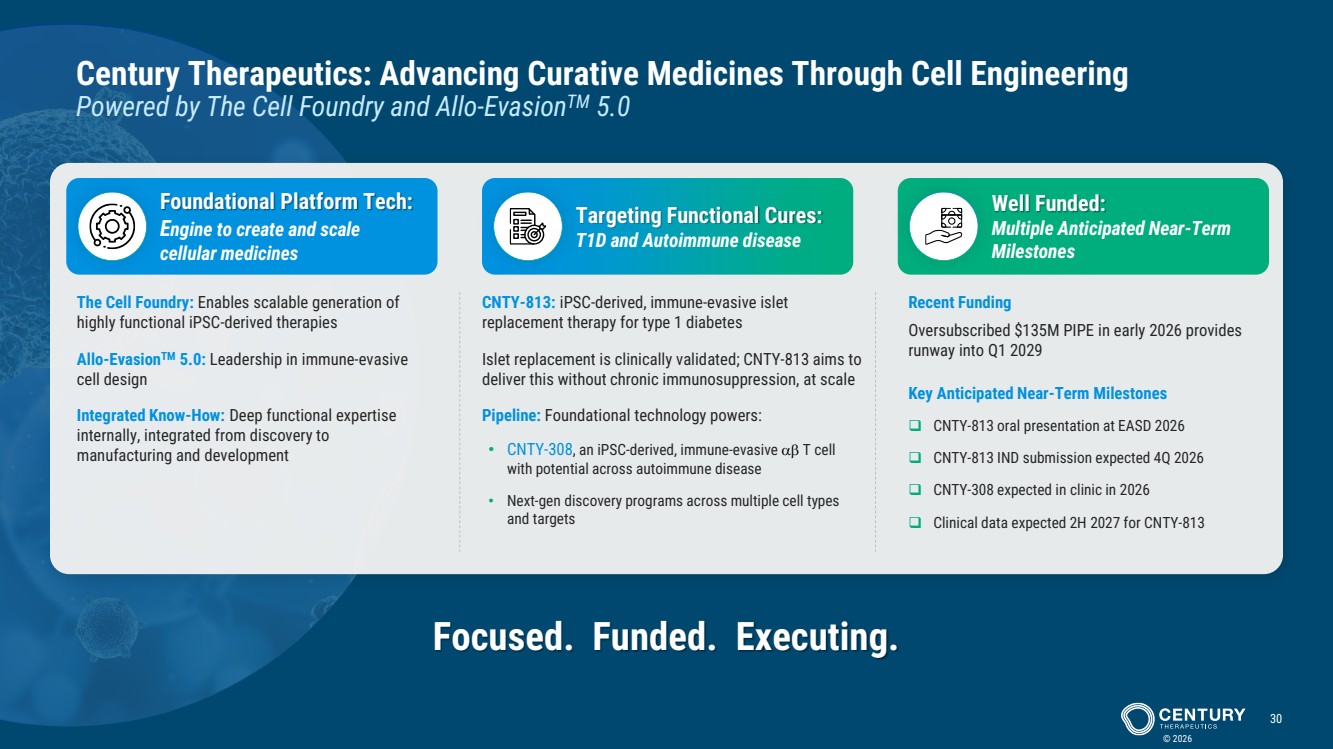
| © 2026 3 Century Therapeutics: Advancing Curative Medicines Through Cell Engineering Powered by The Cell Foundry and Allo-EvasionTM 5.0 The Cell Foundry: Enables scalable generation of highly functional iPSC-derived therapies Allo-EvasionTM 5.0: Leadership in immune-evasive cell design Integrated Know-How: Deep functional expertise internally, integrated from discovery to manufacturing and development Foundational Platform Tech: Engine to create and scale cellular medicines Targeting Functional Cures: T1D and Autoimmune disease Well Funded: Multiple Anticipated Near-Term Milestones CNTY-813: iPSC-derived, immune-evasive islet replacement therapy for type 1 diabetes Islet replacement is clinically validated; CNTY-813 aims to deliver this without chronic immunosuppression, at scale Pipeline: Foundational technology powers: • CNTY-308, an iPSC-derived, immune-evasive T cell with potential across autoimmune disease • Next-gen discovery programs across multiple cell types and targets Recent Funding Oversubscribed $135M PIPE in early 2026 provides runway into Q1 2029 Key Anticipated Near-Term Milestones ❑ CNTY-813 oral presentation at EASD 2026 ❑ CNTY-813 IND submission expected 4Q 2026 ❑ CNTY-308 expected in clinic in 2026 ❑ Clinical data expected 2H 2027 for CNTY-813 Focused. Funded. Executing. |
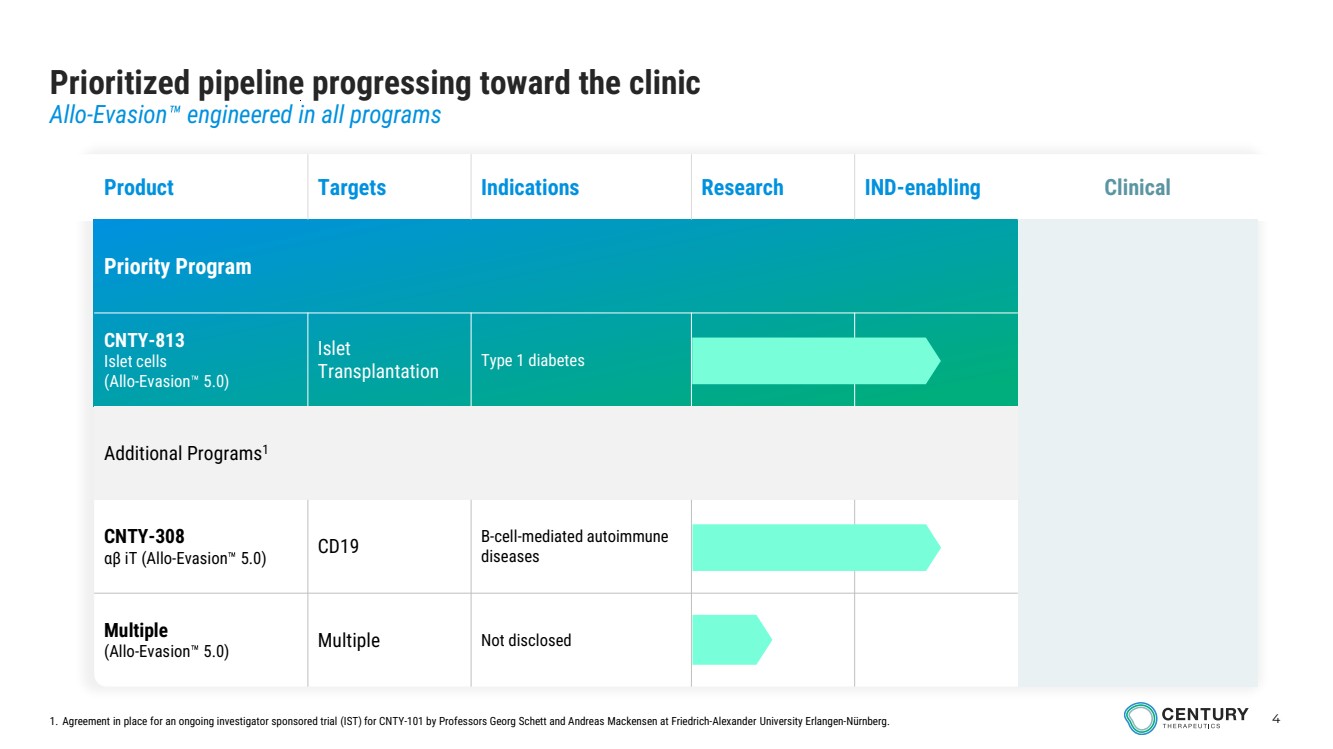
| 4 infusions in outpatient setting Prioritized pipeline progressing toward the clinic Allo-Evasion engineered in all programs 1. Agreement in place for an ongoing investigator sponsored trial (IST) for CNTY-101 by Professors Georg Schett and Andreas Mackensen at Friedrich-Alexander University Erlangen-Nürnberg. Product Targets Indications Research IND-enabling Clinical Priority Program CNTY-813 Islet cells (Allo-Evasion 5.0) Islet Transplantation Type 1 diabetes Additional Programs1 CNTY-308 αβ iT (Allo-Evasion 5.0) CD19 B-cell-mediated autoimmune diseases Multiple (Allo-Evasion 5.0) Multiple Not disclosed |
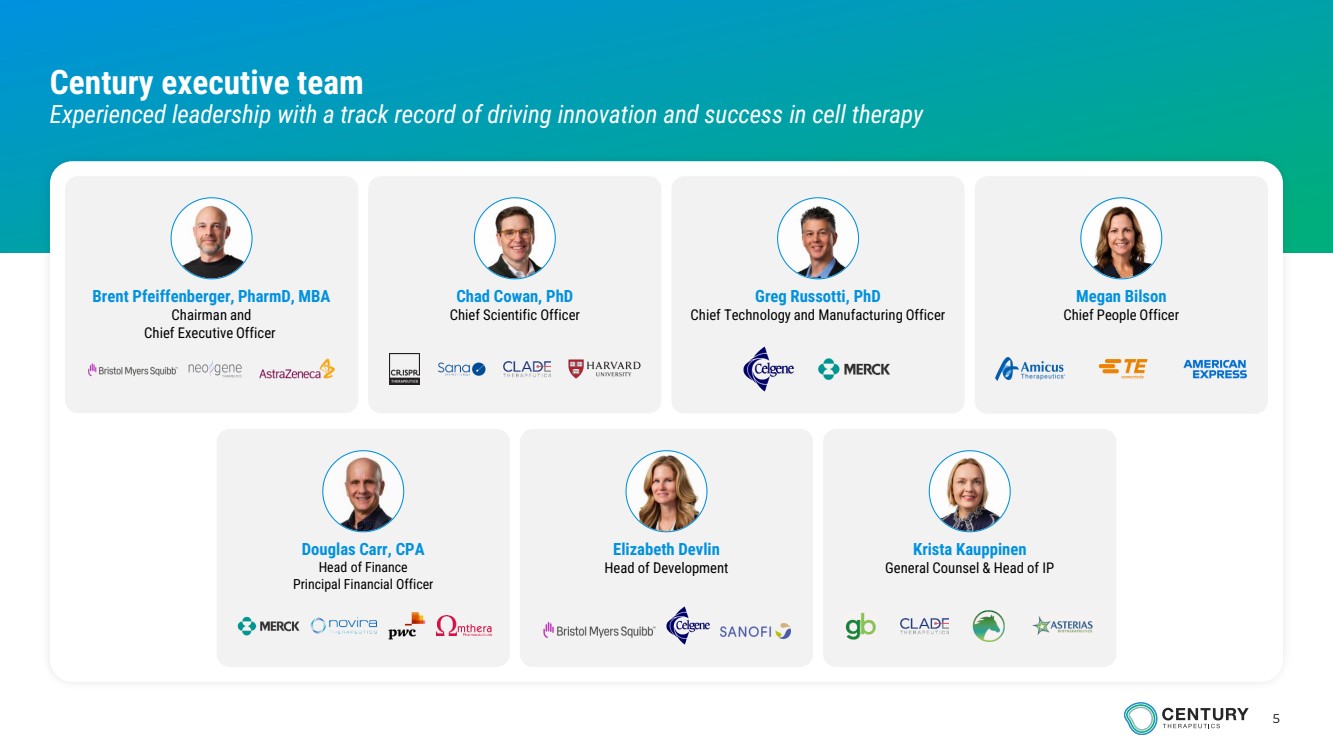
| 5 Century executive team Experienced leadership with a track record of driving innovation and success in cell therapy Chad Cowan, PhD Chief Scientific Officer Brent Pfeiffenberger, PharmD, MBA Chairman and Chief Executive Officer Greg Russotti, PhD Chief Technology and Manufacturing Officer Megan Bilson Chief People Officer Krista Kauppinen General Counsel & Head of IP Douglas Carr, CPA Head of Finance Principal Financial Officer Elizabeth Devlin Head of Development |
| New hope for T1D patients: CNTY-813 and the clinical case for islet replacement iPSC-derived islet replacement therapy engineered with Allo-Evasion 5.0 |
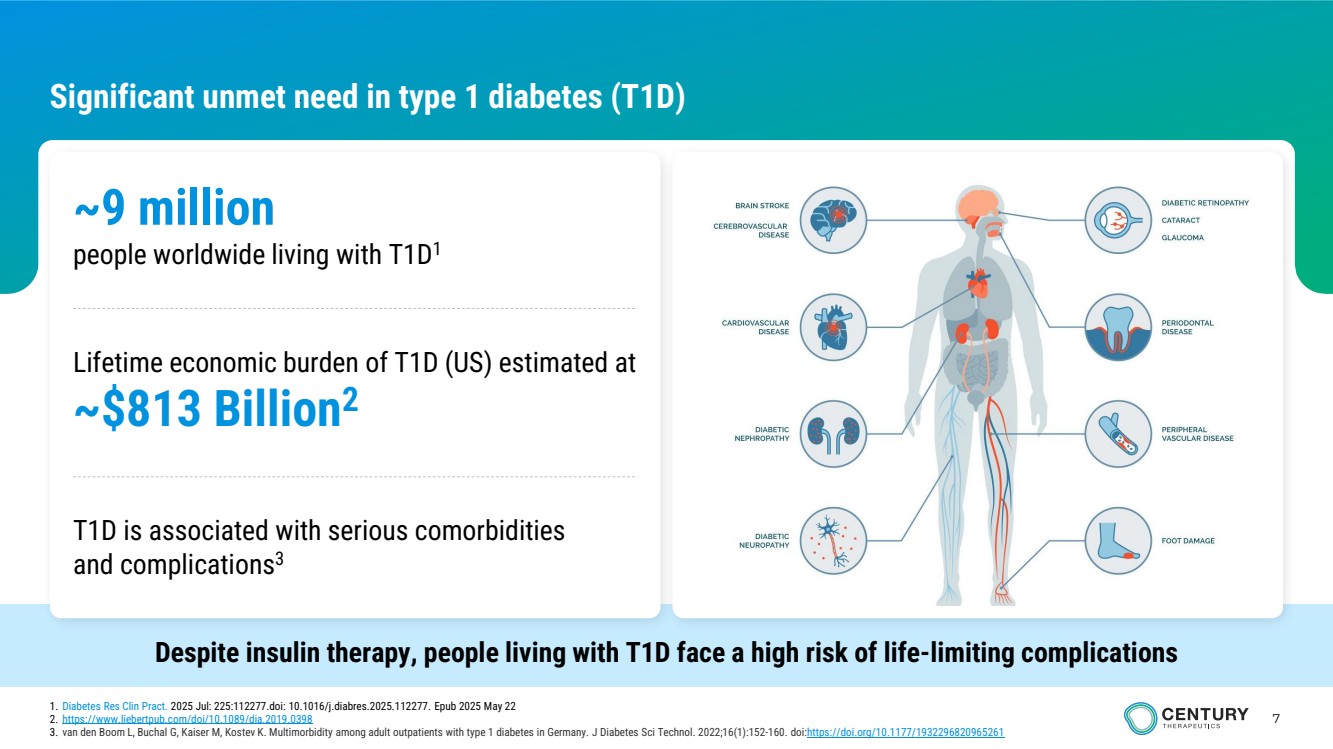
| 7 Significant unmet need in type 1 diabetes (T1D) Despite insulin therapy, people living with T1D face a high risk of life-limiting complications ~9 million people worldwide living with T1D1 Lifetime economic burden of T1D (US) estimated at ~$813 Billion2 T1D is associated with serious comorbidities and complications3 1. Diabetes Res Clin Pract. 2025 Jul: 225:112277.doi: 10.1016/j.diabres.2025.112277. Epub 2025 May 22 2. https://www.liebertpub.com/doi/10.1089/dia.2019.0398 3. van den Boom L, Buchal G, Kaiser M, Kostev K. Multimorbidity among adult outpatients with type 1 diabetes in Germany. J Diabetes Sci Technol. 2022;16(1):152-160. doi:https://doi.org/10.1177/1932296820965261 |
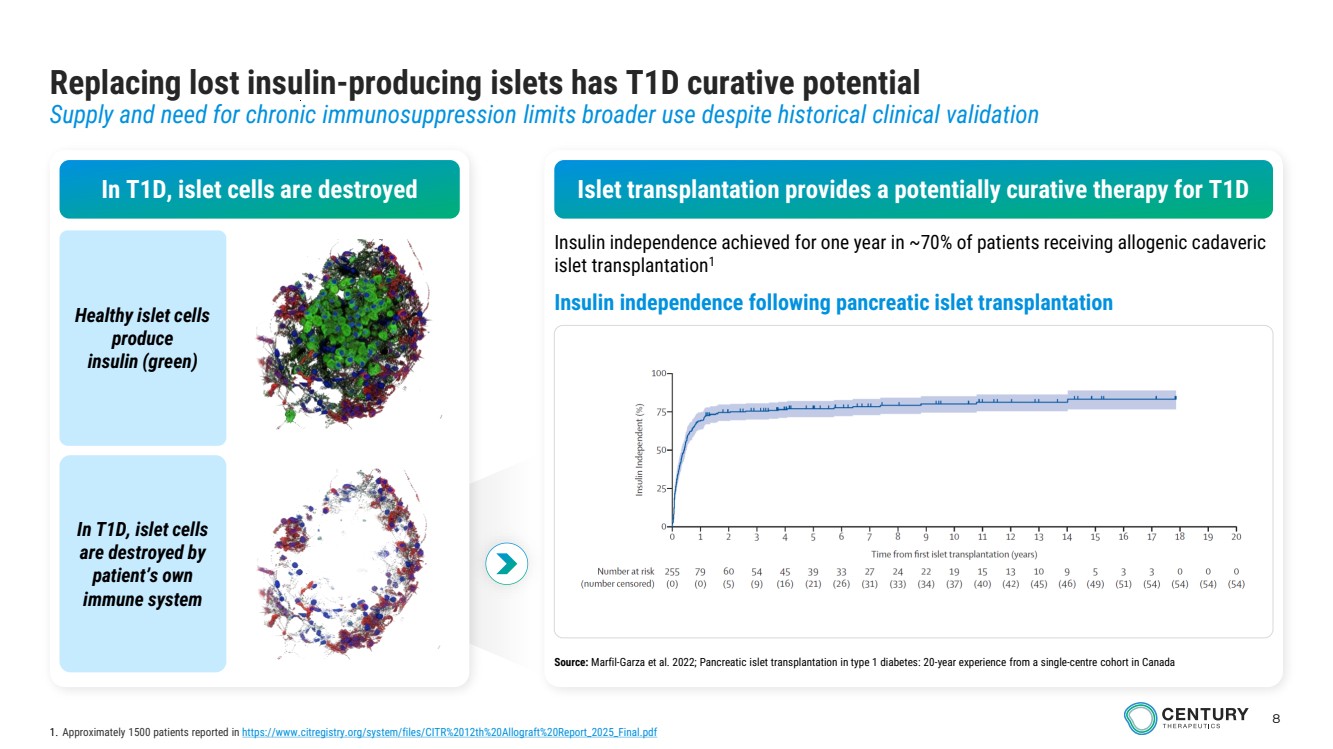
| 8 Replacing lost insulin-producing islets has T1D curative potential Supply and need for chronic immunosuppression limits broader use despite historical clinical validation In T1D, islet cells are destroyed Healthy islet cells produce insulin (green) In T1D, islet cells are destroyed by patient’s own immune system Insulin independence following pancreatic islet transplantation Islet transplantation provides a potentially curative therapy for T1D Insulin independence achieved for one year in ~70% of patients receiving allogenic cadaveric islet transplantation1 Source: Marfil-Garza et al. 2022; Pancreatic islet transplantation in type 1 diabetes: 20-year experience from a single-centre cohort in Canada 1. Approximately 1500 patients reported in https://www.citregistry.org/system/files/CITR%2012th%20Allograft%20Report_2025_Final.pdf |
| 9 Stem-cell (SC) derived islets can restore islet function and address scalability Chronic immunosuppression still limits broader use Zimislecel (VX-880) is a SC-derived insulin producing islet cell therapy1,2 10/12 patients receiving SC-derived islets were exogenous insulin free at 12 months after a single dose3 1. ADA IR Presentation_v FINAL – Vertex Corporate website 2. Based on publicly available information 3. https://www.nejm.org/doi/10.1056/NEJMoa2506549?url_ver=Z39.88-2003&rfr_id=ori:rid:crossref.org&rfr_dat=cr_pub%20%200pubmed VX-880 provides POC for SC-derived islet therapies but need for immunosuppression remains a challenge Total Daily Insulin Dose (units/day) Zimislecel is delivered by infusion into the hepatic portal vein Steroid free immunosuppression is used to protect the islet grafts 1 2 |
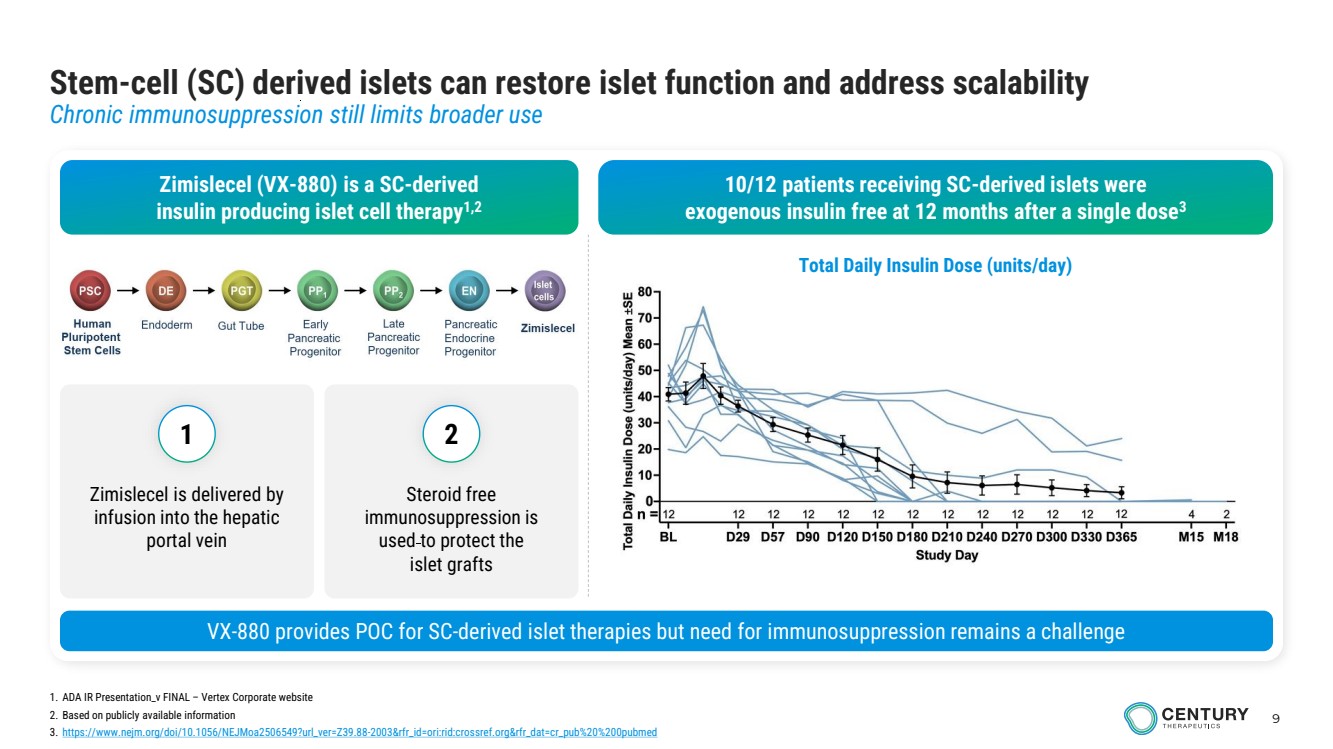
| 10 Century’s potential solution to T1D is leveraging iPSCs + ALLO-EVASIONTM 5.0 CNTY-813: scalable, iPSC-derived islet replacement therapy engineered to eliminate the need for immunosuppression 1. https://www.centurytx.com/wp-content/uploads/ASH_Welstead_Universal-Protection-of-Allogenic-T-Cells-Final.pdf 2. https://ashpublications.org/bloodadvances/article/doi/10.1182/bloodadvances.2024013436/518079/Universal-Protection-of-Allogeneic-T-Cell 3. Peraro et al, Mol. Therapy 2021, 29(12), 3398-3409; https://pmc.ncbi.nlm.nih.gov/articles/PMC8636170 ALLO-EVASION 5.0: Evading cell-mediated and humoral responses Protection from: T cells NK cells Humoral Immunity 1 2 Deletion of HLA-I Deletion of HLA-II 3 Insertion of CD300a TASR pan-NK inhibitory ligand1, 2 4 Insertion of cell-surface enzyme to degrade IgG antibodies3 IgG Cleavage Reduces Fc binding and humoral activity No HLA-I Prevents recognition by CD8+ cells T cells No HLA-II Prevents recognition by CD4+ cells T cells CD300a TASR Ligand Inhibits NK cell activation 1 NK Cell 2 3 Pan NK Inhibitory ligand 4 Fc CIITA KO (HLA-II) CD4+T Cell b2M KO (HLA-I) CD8+T Cell |
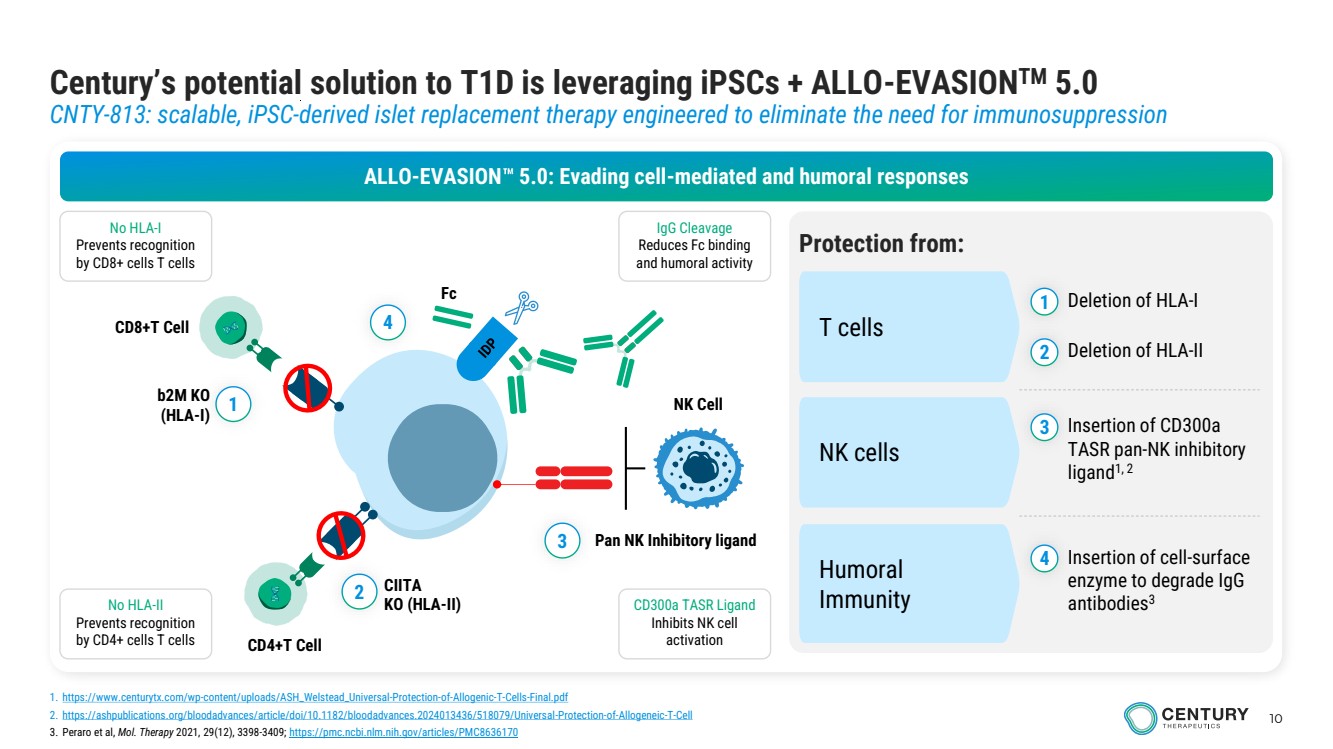
| 11 ✓ CD300a-TASR mimics dying cell signal to inhibit NK cells ✓ Sends a “no need to kill” signal to NK cell ✓ CD300a expressed across NK cell subsets as well as monocytes CD300a-TASR can protect Century’s iPSC-derived cells from NK cell killing 0 0 . 0 1 0 . 1 1 E:T Ratio 0.01 0.1 1 0 25 50 75 100 T Cell Survival (%) 0 0 0.01 0.1 1 No Cloak CD300a TASR CD47 HLA-I+ 20 hours Target (T) T Cell NK Effector (E) CD300a TASR outperformed CD47 and approaches unedited HLA-I+ protection levels TASR KI b2M KO iPSC drug product (live) “No Need To Kill” NK Cell TASR CD300a Dead/dying cell NK Cell “No Need To Kill” CD300a CD300a detects disordered membrane lipids CD300a-TASR mimics dead or dying cells CD300a consistently broadly expressed on NK cells N = 45 Diverse PBMC Donors CD300a NKG2A KIR 0 20 40 60 80 100 Inhibitory Receptor Expression on NK Cells (n = 46 donors) % of NK Cells NK Donor 2 (2Cdom NK Donor 1 (2A ) dom) NK Donor 3 (2Adom) https://ashpublications.org/bloodadvances/article/doi/10.1182/bloodadvances.2024013436/518079/Universal-Protection-of-Allogeneic-T-Cell; https://www.centurytx.com/wp-content/uploads/ASH_Welstead_Universal-Protection-of-Allogenic-T-Cells-Final.pdf |
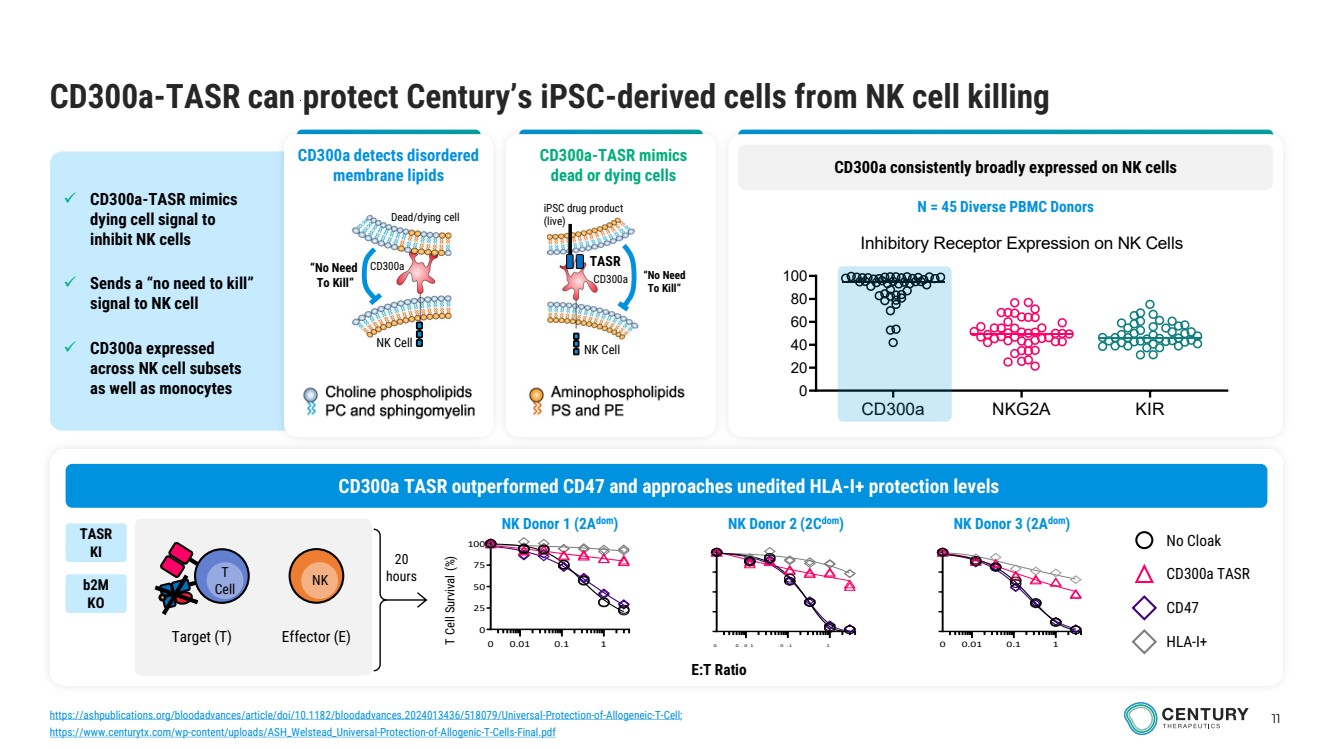
| 12 Immunoglobulin degrading protease As a result, Century’s cells has been shown to resist complement, antibody-directed killing, and antibody-directed engulfment Century T cells stably express IDP, an enzyme that cleaves IgGs below the hinge Century’s IgG degrading protease (IDP) protected cells from humoral immunity Complement Dependent Cytotoxicity Antibody-Dependent Cellular Cytotoxicity Antibody-Dependent Cellular Phagocytosis Measure of Phagocytosis (Area under the curve) Cells expressing IDP showed less phagocytosis in the presence of an antibody trigger Cells → WT Century WT Condition → +Ab +Ab - Cells expressing IDP showed greater survival GFP IdeStm 0 20 40 60 80 100 % Specific Lysis ✱✱✱✱ WT Century Cells expressing IDP showed less lysis WT Gen 2.3 0 25 50 75 100 % Survival ✱ WT Century Source: Company data on file 97% less lysis vs. WT 70% greater survival vs. WT 60% less phagocytosis, near baseline |
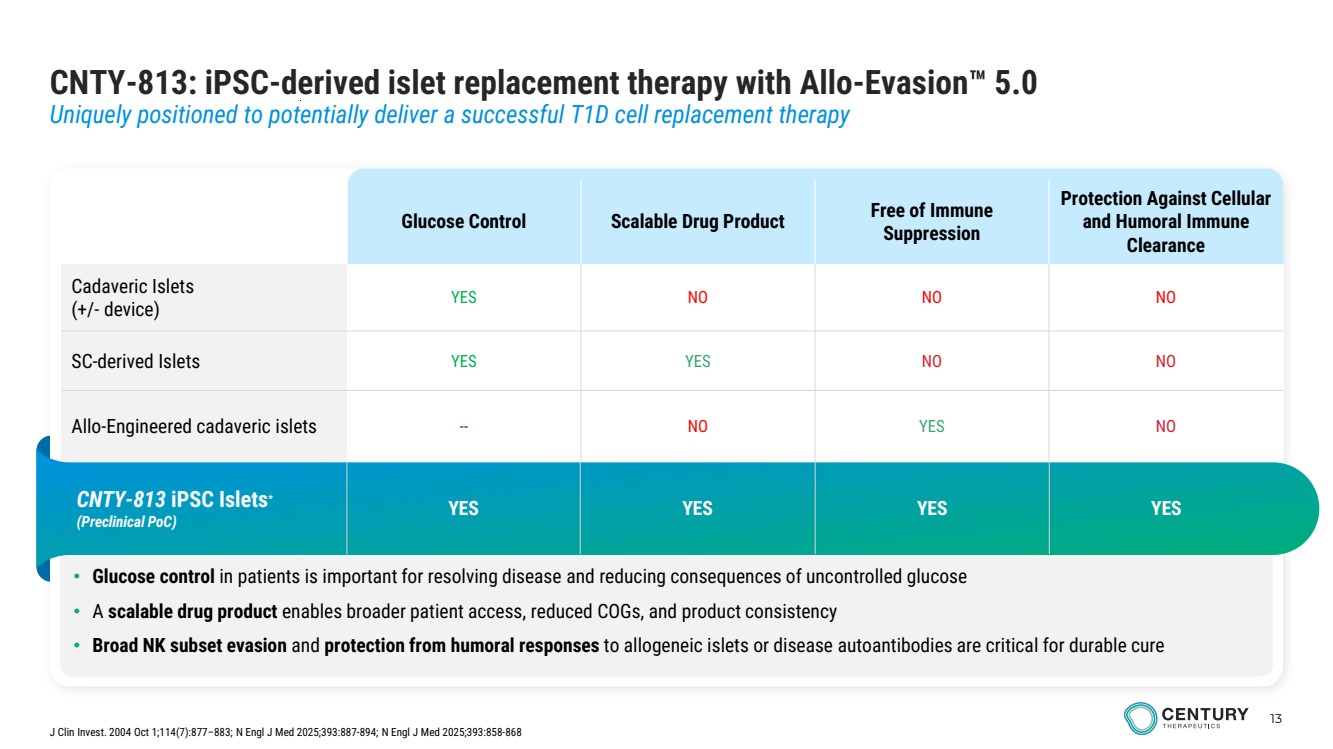
| 13 CNTY-813: iPSC-derived islet replacement therapy with Allo-Evasion 5.0 Uniquely positioned to potentially deliver a successful T1D cell replacement therapy • Glucose control in patients is important for resolving disease and reducing consequences of uncontrolled glucose • A scalable drug product enables broader patient access, reduced COGs, and product consistency • Broad NK subset evasion and protection from humoral responses to allogeneic islets or disease autoantibodies are critical for durable cure Glucose Control Scalable Drug Product Free of Immune Suppression Protection Against Cellular and Humoral Immune Clearance Cadaveric Islets (+/- device) YES NO NO NO SC-derived Islets YES YES NO NO Allo-Engineered cadaveric islets -- NO YES NO CNTY-813 iPSC Islets* (Preclinical PoC) YES YES YES YES J Clin Invest. 2004 Oct 1;114(7):877–883; N Engl J Med 2025;393:887-894; N Engl J Med 2025;393:858-868 |
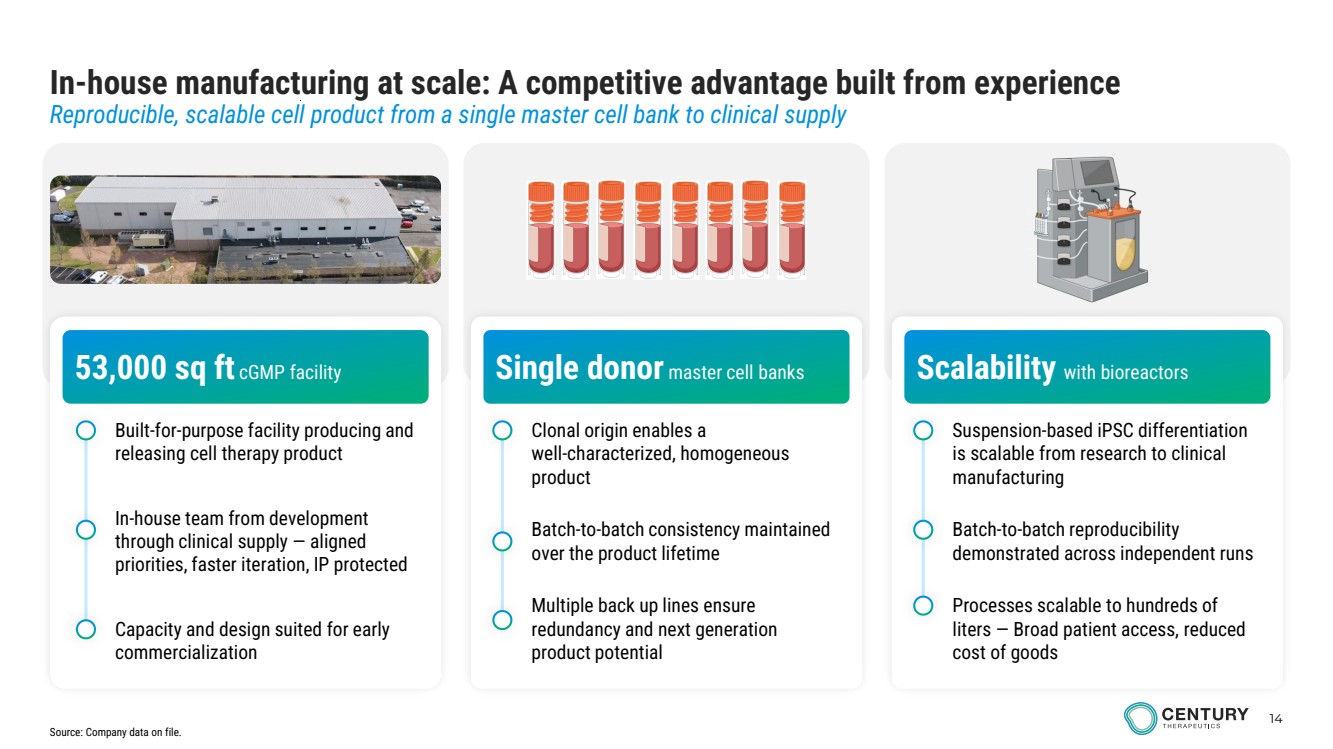
| 14 In-house manufacturing at scale: A competitive advantage built from experience Reproducible, scalable cell product from a single master cell bank to clinical supply 53,000 sq ft cGMP facility Single donor master cell banks Scalability with bioreactors Built-for-purpose facility producing and releasing cell therapy product In-house team from development through clinical supply — aligned priorities, faster iteration, IP protected Capacity and design suited for early commercialization Clonal origin enables a well-characterized, homogeneous product Batch-to-batch consistency maintained over the product lifetime Multiple back up lines ensure redundancy and next generation product potential Suspension-based iPSC differentiation is scalable from research to clinical manufacturing Processes scalable to hundreds of liters — Broad patient access, reduced cost of goods Batch-to-batch reproducibility demonstrated across independent runs Source: Company data on file. |
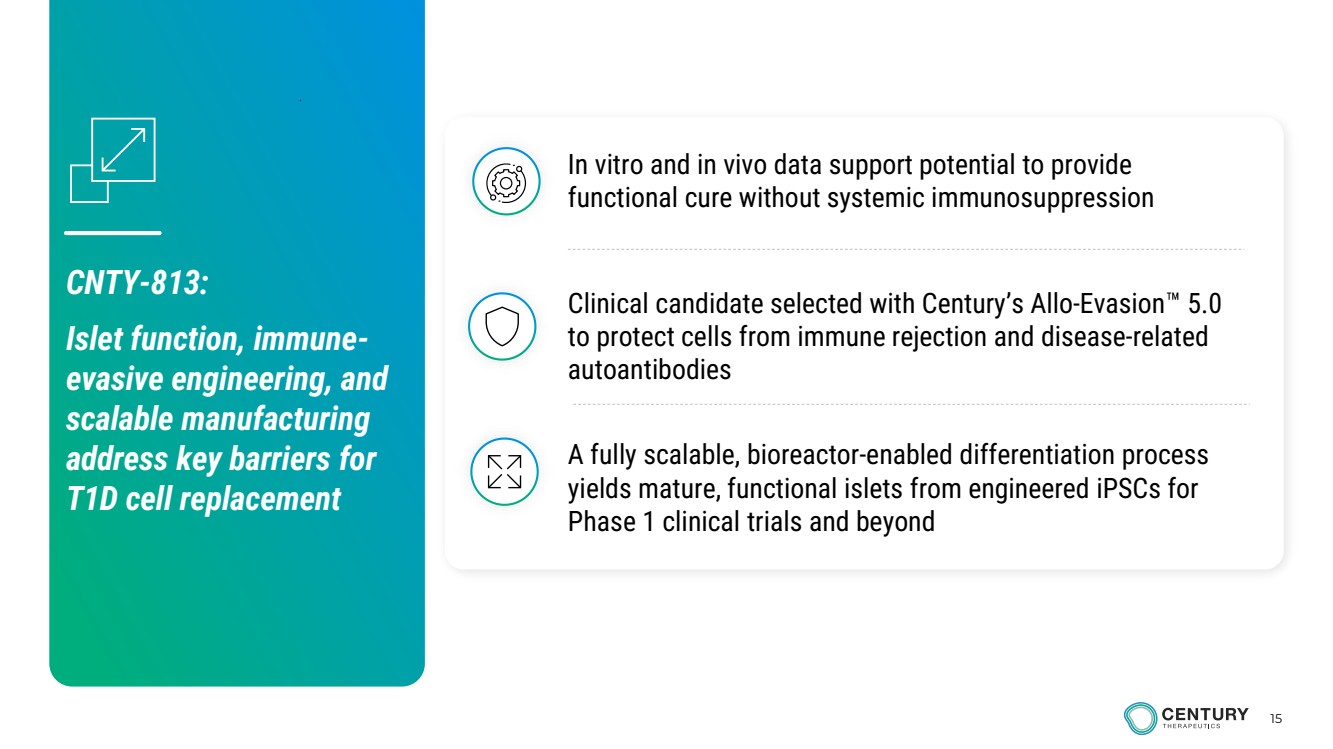
| 15 A fully scalable, bioreactor-enabled differentiation process yields mature, functional islets from engineered iPSCs for Phase 1 clinical trials and beyond Clinical candidate selected with Century’s Allo-Evasion 5.0 to protect cells from immune rejection and disease-related autoantibodies In vitro and in vivo data support potential to provide functional cure without systemic immunosuppression CNTY-813: Islet function, immune-evasive engineering, and scalable manufacturing address key barriers for T1D cell replacement |
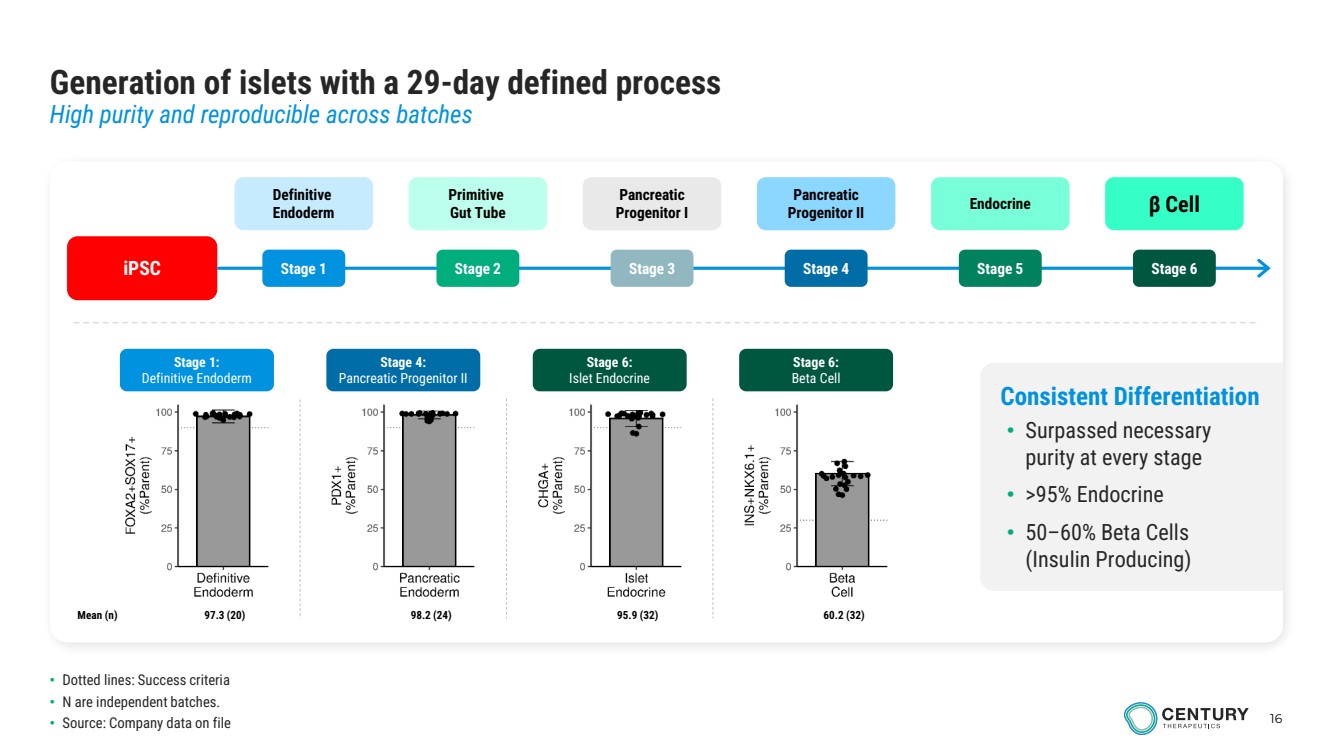
| 16 Generation of islets with a 29-day defined process High purity and reproducible across batches Consistent Differentiation • Surpassed necessary purity at every stage • >95% Endocrine • 50–60% Beta Cells (Insulin Producing) Stage 1: Definitive Endoderm 97.3 (20) Stage 4: Pancreatic Progenitor II 98.2 (24) Stage 6: Islet Endocrine 95.9 (32) Stage 6: Beta Cell Mean (n) 60.2 (32) iPSC Definitive Endoderm Stage 1 Primitive Gut Tube Stage 2 Pancreatic Progenitor II Stage 4 Endocrine Stage 5 β Cell Stage 6 Pancreatic Progenitor I Stage 3 • Dotted lines: Success criteria • N are independent batches. • Source: Company data on file |
| 17 Phase 1 clinical manufacturing process established and executed from MCB across multiple independent batches MCB Thaw iPSC Expansion Bioreactor Differentiation Cryopreserved Intermediate Post-Thaw Maturation Final Fresh Product Consistent final product flow cytometry profiles across 3 at-scale batches • 3 Batches • 11 Samples Endocrine Purity Beta Cell Content Islet Cell Impurity Source: Company data on file |
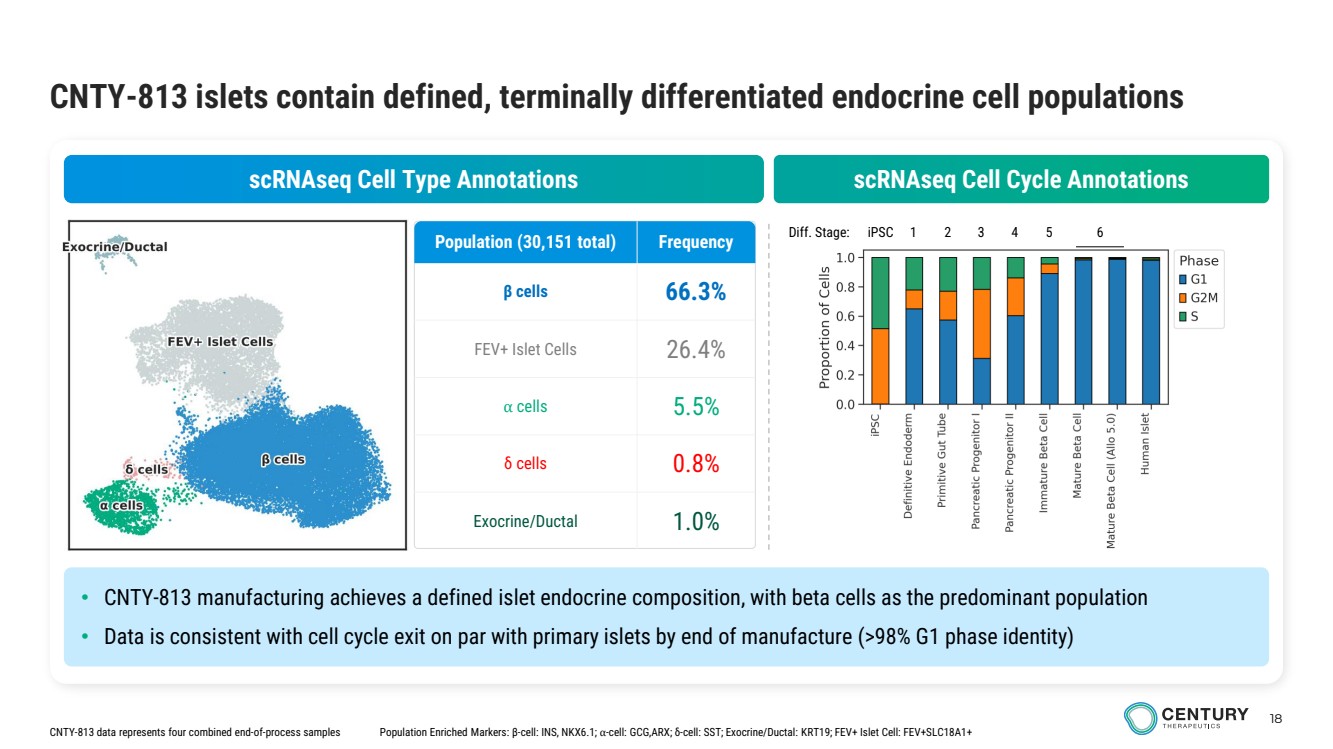
| 18 CNTY-813 islets contain defined, terminally differentiated endocrine cell populations Population Enriched Markers: β-cell: INS, NKX6.1; ⍺-cell: GCG,ARX; δ-cell: SST; Exocrine/Ductal: KRT19; FEV+ Islet Cell: FEV+SLC18A1+ Diff. Stage: scRNAseq Cell Type Annotations scRNAseq Cell Cycle Annotations • CNTY-813 manufacturing achieves a defined islet endocrine composition, with beta cells as the predominant population • Data is consistent with cell cycle exit on par with primary islets by end of manufacture (>98% G1 phase identity) CNTY-813 data represents four combined end-of-process samples iPSC 1 2 3 4 5 6 Population (30,151 total) Frequency β cells 66.3% FEV+ Islet Cells 26.4% ⍺ cells 5.5% δ cells 0.8% Exocrine/Ductal 1.0% |
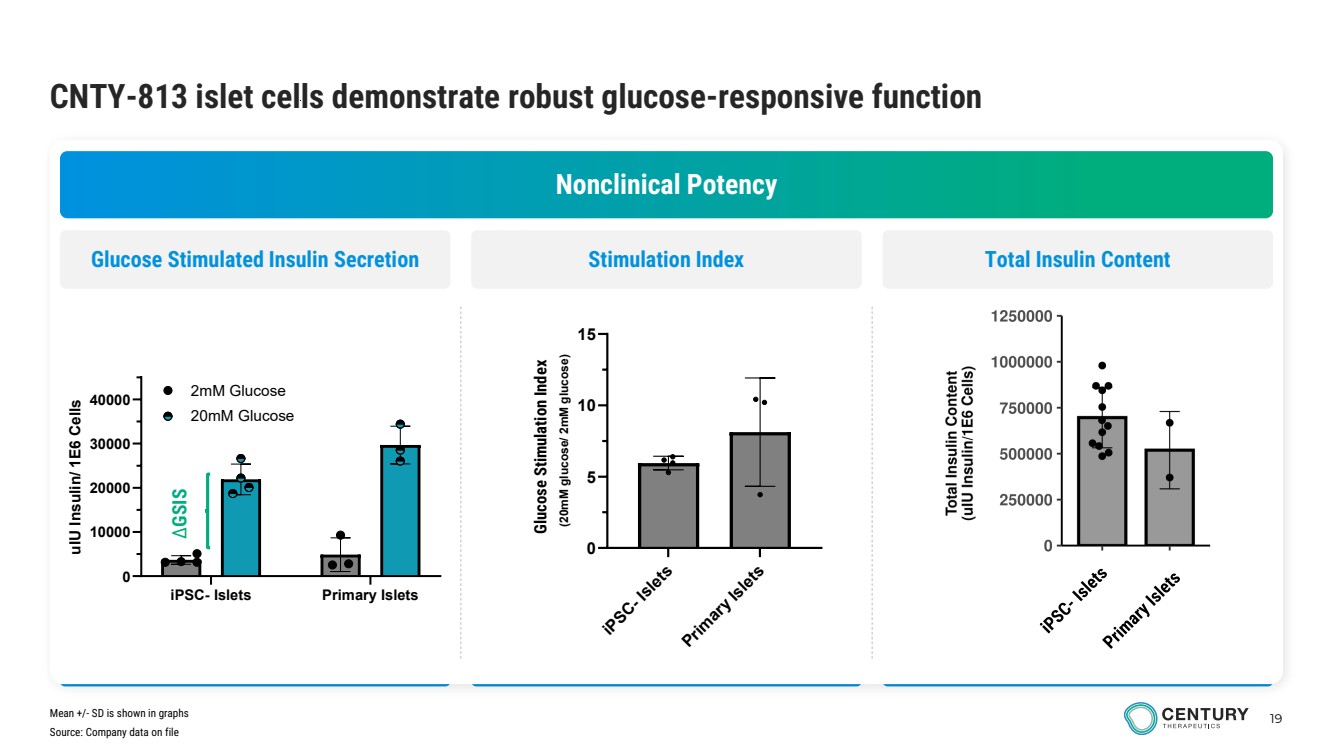
| 19 CNTY-813 islet cells demonstrate robust glucose-responsive function Nonclinical Potency Glucose Stimulated Insulin Secretion Stimulation Index Total Insulin Content Source: Company data on file iPSC- Islets Primary Islets 0 10000 20000 30000 40000 uIU Insulin/ 1E6 Cells 2mM Glucose 20mM Glucose ∆GSIS Mean +/- SD is shown in graphs iPSC- Islets Primary Islets 0 5 10 15 Glucose Stimualtion Index (20mM glucose/ 2mM glucose) Glucose Stimulation Index |
| 20 Allo-EvasionTM 5.0-edited CNTY-813 restored glucose control for >11 months CNTY-813 islets rapidly restored normoglycemia in STZ-induced diabetic mice Preclinical Potency Non-Fasted Blood Glucose 0 20 40 60 80 100 120 0 100 200 300 400 500 600 Time (min) Blood Glucose (mg/dL) Diabetic Control Unedited CNTY Islet Cells (5M) CNTY-813 (SRC) (5M) - 12 weeks CNTY-813 (SRC) (5M) - 49 weeks Glucose Control 0 25 50 75 10 125 150 175 20 2 5 250 275 30 325 350 375 0 100 200 300 400 500 600 Days Post Treatment Blood Glucose (mg/dL) No Treatment CNTY-813 (SRC) (5M) Unedited CNTY Islet Cells (5M) Normoglycemic Control Glucose Control Glucose Tolerance Test Mean +/- SEM Mean +/- SD Source: Company data on file STZ = Streptozotocin | SRC = Sub renal capsule implantation, Gray shaded area = normal blood glucose range |
| 21 CNTY-813 grafts maintain endocrine identity with no evidence of tumorigenesis in mouse models Endocrine graft identity over time INS+ (green) CHGA+ (orange) Merged (yellow) Ki67+ (pink) DAPI (blue) INS: Insulin stain; CHGA: CHGA stain; Ki67: Stain for Ki67; DAPI:nuclear stain 2 weeks 4 weeks 8 weeks 24 weeks ✓ Endocrine graft morphology maintained ✓ No Ki67 increase or cyst formation ✓ No tumorigenesis observed in >140 mice with >3-month follow up (>1B cells infused) 200µm Source: Company data on file |
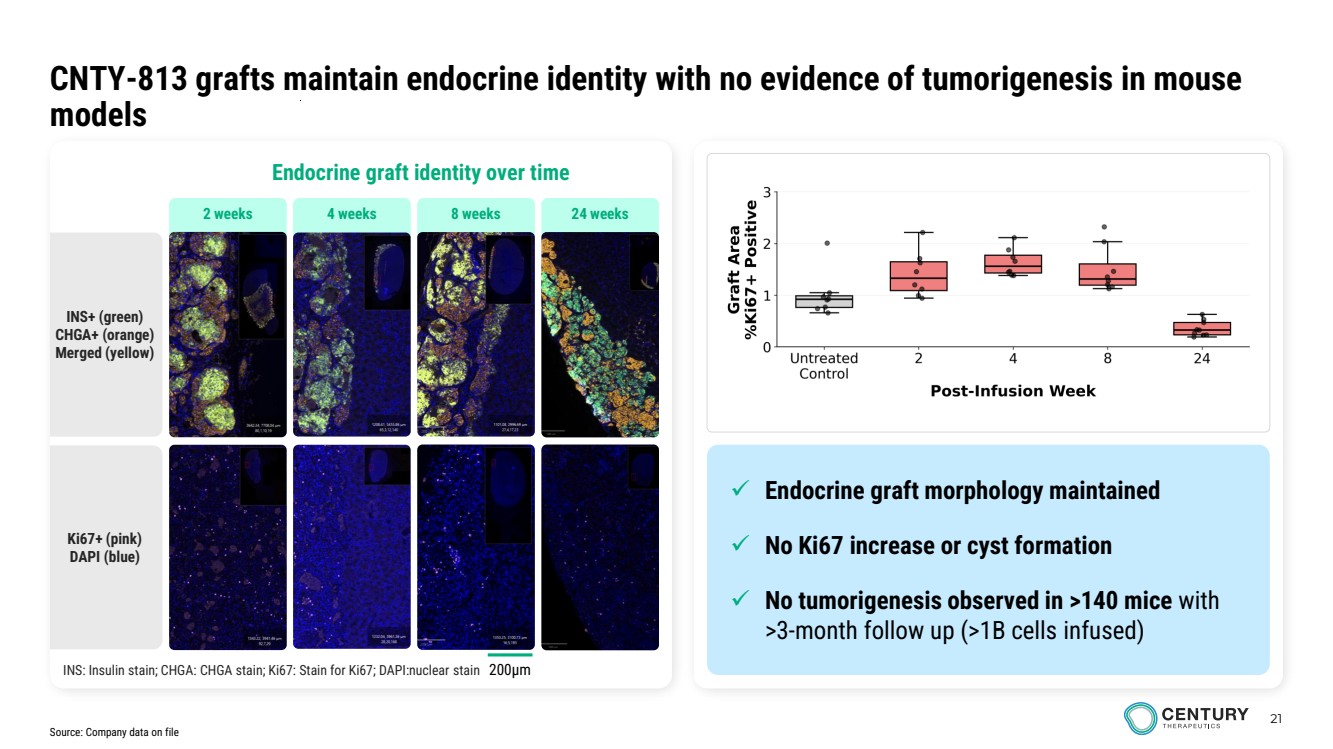
| 22 Allo-EvasionTM 5.0 protected CNTY-813 from rejection in a humanized mouse model Glucose Stimulation Index Glucose Tolerance Test (GTT) (11 weeks post-islet infusion) Reduced function with PBMC engraftment Maintained function with PBMC engraftment Allo-Evasion 5.0 maintained CNTY-813 Glucose Stimulated Insulin Secretion and GTT performance in vivo1 0 7 14 21 28 35 42 49 0 5 10 15 Days Post Transplant Glucose-Stimulated Insulin Secretion Index C( -peptide induction over baseline) Unedited Islets + PBMCs Unedited Islets Allo-Rejection 0 7 14 21 28 35 42 49 0 5 10 15 Days Post Transplant Glucose-St mi ulated Insulin Secretion Index (C-peptide induction over baseline) CNTY-813 Allo-Evasion 5.0 Islets + PBMCs CNTY-813 Allo-Evasion 5.0 Islets Mean ± SEM TM TM 0 30 60 90 120 0 200 400 600 Time (min.) Blood Glucose (mg/dL) Unedited Islets + PBMCs Unedited Islets 0 30 60 90 120 0 200 400 600 Time (min.) Blood Glucose (mg/dL) Allo-Evasion 5.0 Islets + PBMCs Allo-Evasion 5.0 Islets Mean ± SD TM TM Source: Company data on file 1. Humanized mouse model includes functional human T cells without GvHD (MHC KO) and TgHuIL-15 to support functional NK cell engraftment and survival Unedited Islets Allo-EvasionTM 5.0 Islets Unedited Islets Allo-EvasionTM 5.0 Islets |
| CAR-iT Franchise: CD4+/CD8+ αβ CAR-iT-cell with Allo-Evasion 5.0 |
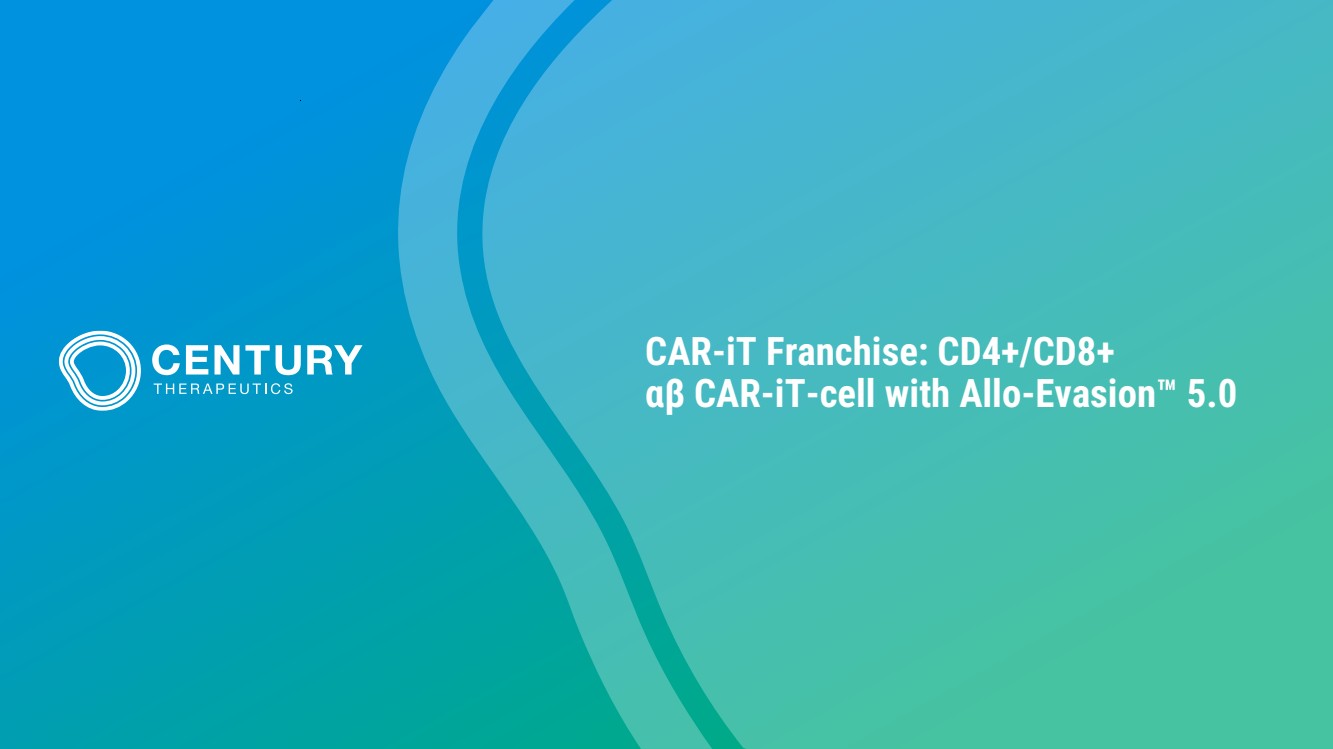
| 24 CNTY-308 is a CAR-iT targeting CD19 that aims to pair the characteristics of autologous CAR-T with the convenience of an allogeneic CAR-T for the treatment of autoimmune disease Potential to address significant unmet need in autoimmunity with allogeneic CAR iT cells • CNTY-308 expected to enter clinic in 2026 • Autologous CAR T cell therapies are showing compelling clinical safety and efficacy across a broad range of autoimmune diseases1 • Clinical data from B-cell-targeted cell therapies in autoimmune disease support the MoA and development of CAR iT therapies • CNTY-308 lays the groundwork for expansion of the CAR-iT franchise into other diseases CNTY-308 (CD19 CAR iT with Allo-EvasionTM 5.0) 1. Muller 2024 doi/full/10.1056/NEJMoa2308917; Nordmann-Gomes 2025 doi.org/10.1016/j.semarthrit.2025.152786 2. Gao 2025 EULAR Abstract DOI: 10.1016/j.ard.2025.05.396; Wang 2025 doi.org/10.1016/j.cell.2025.05.038 |
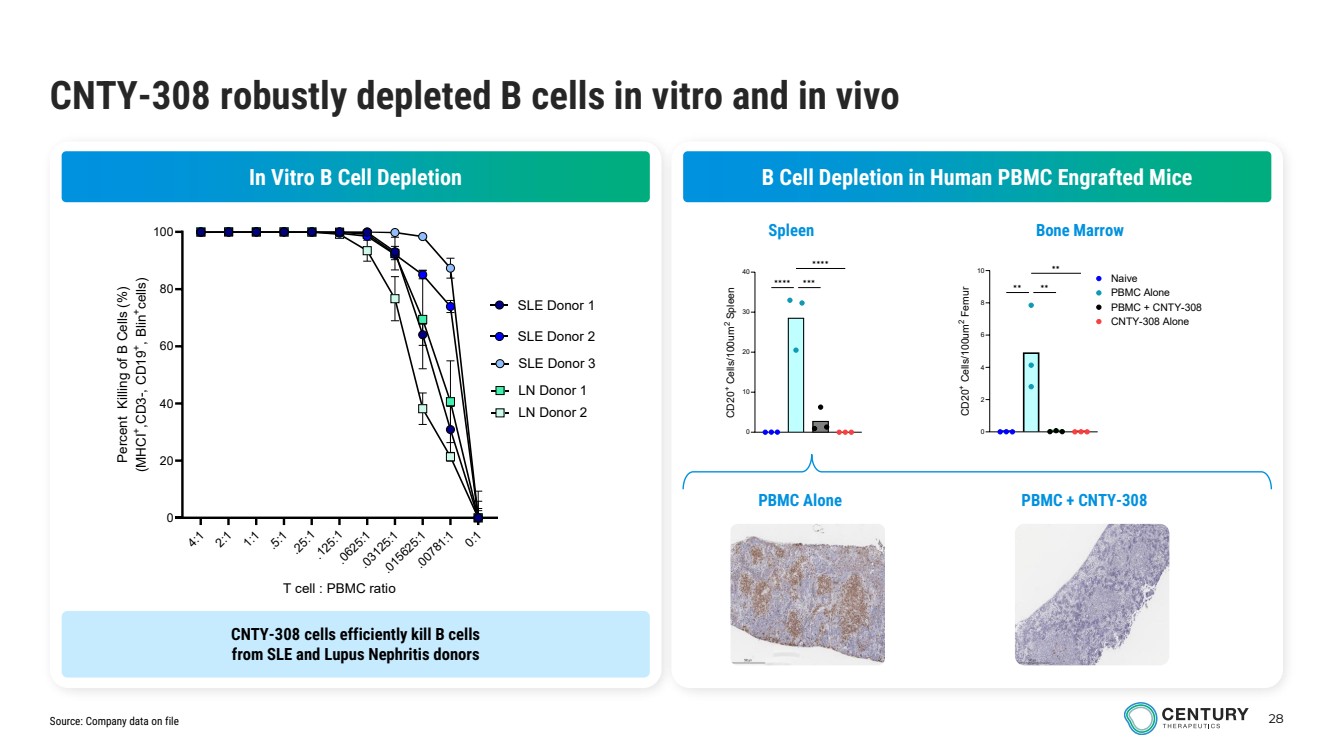
| 25 CNTY-308 is an iPSC-derived CD19-targeted CAR-iT intended for B-cell-mediated disease CNTY-308 • CD19-targeted CAR to target B-cells for cytotoxic depletion – 4-1BB and CD3z co-stim domain to stimulate expansion on target engagement • Displays characteristics of autologous CAR-T cells1 ✓ Highly proliferative upon target engagement ✓ Secretes cytokines (e.g., IL-2, IFNγ and TNFα) ✓ Cytotoxic effector function rapidly eliminates tumor cells ✓ Long-term persistence in vivo ✓ Eliminates CD19+ B-cells from healthy donors in vitro2 • Allo-Evasion 5.0 edits designed to include protection from host T cell, NK cell, and humoral response • Native ab TCR knock-out to eliminate the risk of GvHD 1. www.centurytx.com/wp-content/uploads/ASH_Heinze_iPSC-Derived-CD4-CD8-Final.pdf 2. Company data on file 3. IDP = IgG degrading enzyme CD4+/CD8+ αβ iT-cell |
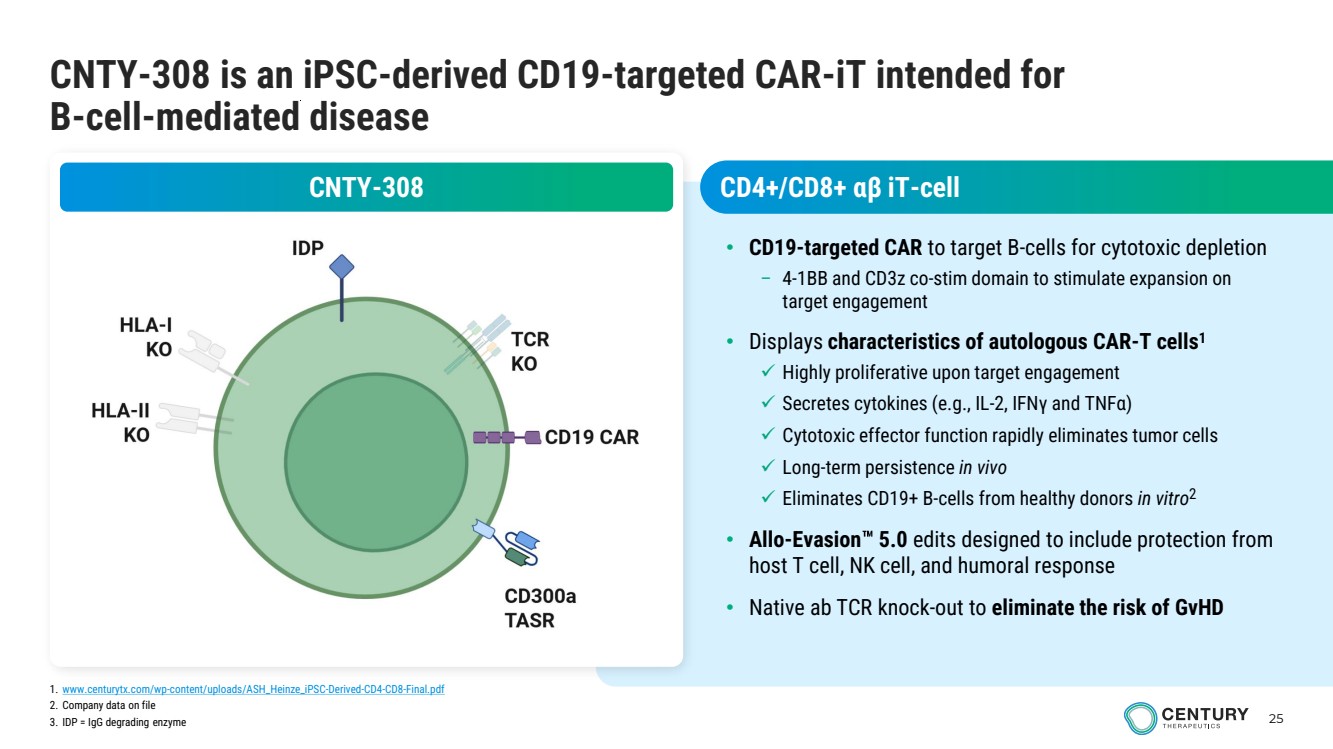
| 26 • Self-supports with own target-mediated IL-2 • High functional persistence: kills for >10 rounds, persists in blood for 32+ days, controls tumor after in vivo rechallenge In preclinical studies, CNTY-308 cells are comparable to primary CAR-T cells Source: Company data on file ≈ 1’ CAR-T CNTY-308 IL-2 secretion (pg/mL) ≈ Requires exogenous IL-2/IL-15 Repeat killing (rounds) Persistence in blood (days) Tumor control after rechallenge (in vivo) ~2,000 No >10 32 Yes ~3,000 No >10 32 Yes Function ≈ ≈ ≈ ≈ CNTY–308 and 1’ CAR-T |
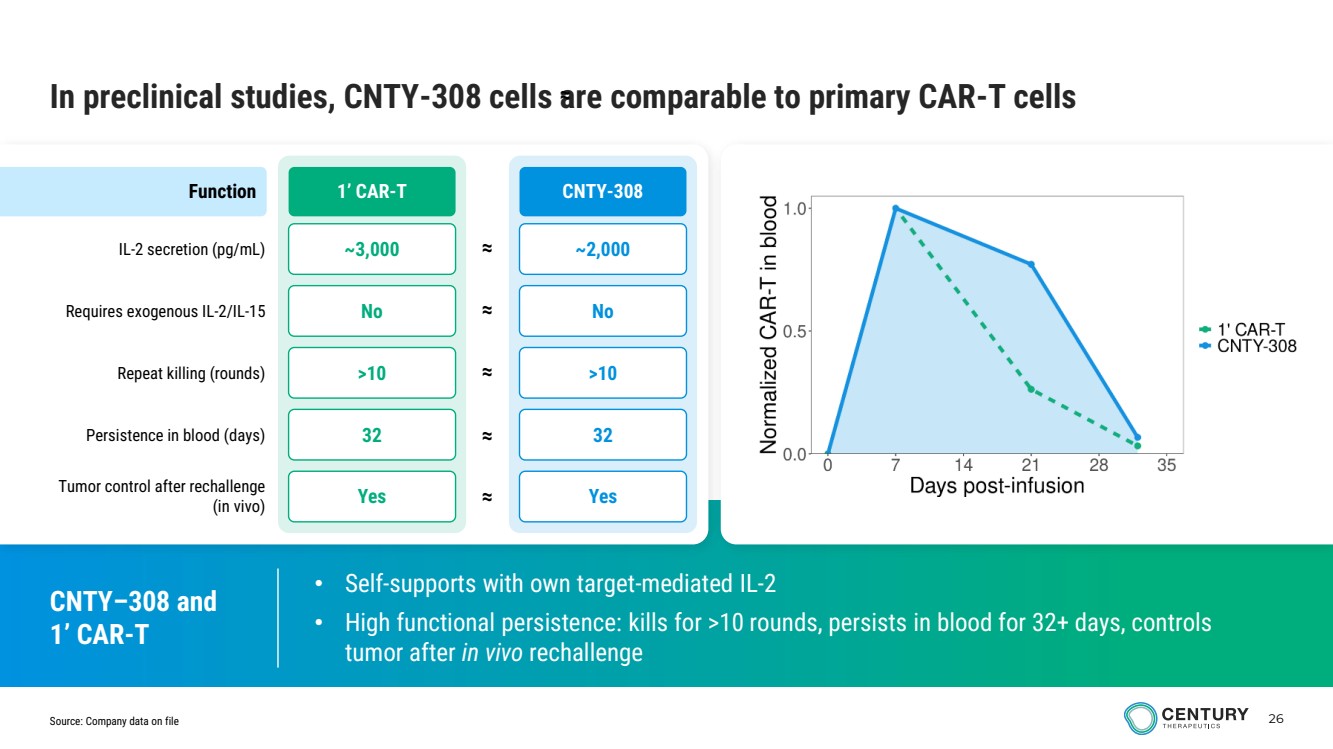
| 27 In preclinical animal studies, Century iPSC-CAR-T cells controlled tumors, persisted for ≥1 month, and retained cytotoxic capacity upon rechallenge Source: Company data on file • Disseminated Nalm6 model (1e5 cells infused) • Effectors added 3 days post-tumor infusion • 1’ CAR-T dose: 5e6 cells • iPSC-CAR-T dose: 30e6 cells • No added cytokine or small molecule support • iPSC-CAR-T produced at phase 1 clinical scale In vivo experimental details Complete tumor control Measurable long-term persistence ≥1 mo Cytotoxicity maintained upon re-challenge with engrafted cells Group 1: PBS only Group 2: 1' CAR−T Group 3: iPS−CAR−T 0 10 20 30 0 10 20 30 0 10 20 30 1e+07 1e+09 1e+11 Days Post−Effector Infusion Luminescence (log axis) Tumor challenge Tumor challenge Tumor challenge 1e+06 1e+07 1e+08 1e+09 1e+10 0 10 20 30 40 Days Post−Effector Infusion Luminescence (log axis) Group PBS only 1' CAR−T iPS−CAR−T 1e+06 1e+07 1e+08 1e+09 1e+10 0 10 20 30 40 Days Post−Effector Infusion L u min e s c e n c e (lo g a xis) Class PBS only 1' CAR−T iPS−CAR−T Group PBS only 1' CAR−T iPS−CAR−T 10 100 1000 PBS 1' CAR−T iPS−CAR−T Group hCD45+ count per 100 uL whole blood Group joined by lines d7 d21 d35 Key d27 tumor rechallenge • iPSC-CAR-T persist 21 days post-infusion, • iPSC-CAR-T detectable at day 35, 7 days post-tumor rechallenge (at day 28) Tumor challenge Tumor challenge |
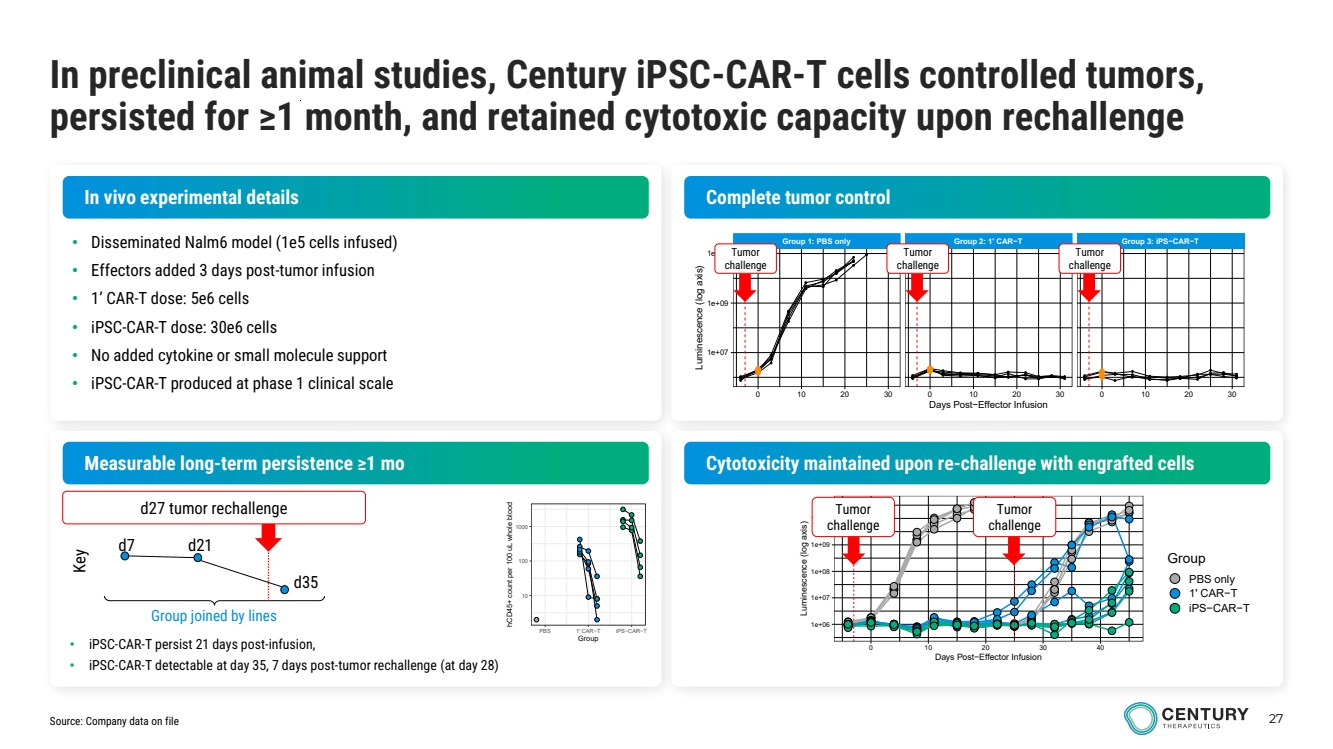
| 28 CNTY-308 robustly depleted B cells in vitro and in vivo Source: Company data on file In Vitro B Cell Depletion B Cell Depletion in Human PBMC Engrafted Mice 0 2 4 6 8 10 CD20 + Cells/100um 2 Femur Naive PBMC Alone PBMC + CNTY-308 CNTY-308 Alone ✱✱ ✱✱ ✱✱ Bone Marrow 0 10 20 30 40 CD20 + Cells/100um 2 Spleen ✱✱✱✱ ✱✱✱ ✱✱✱✱ Spleen 4:1 2:1 1:1 .5:1 .25:1 .125:1 .0625:1 .03125:1 .015625:1 .0 781:1 0:1 0 20 40 60 80 100 T cell : PBMC ratio Percent Killing of B Cells (%) (MHCI+ ,CD3-, CD19 + , Blin +cells) SLE Donor 1 SLE Donor 2 SLE Donor 3 LN Donor 1 LN Donor 2 CNTY-308 cells efficiently kill B cells from SLE and Lupus Nephritis donors PBMC Alone PBMC + CNTY-308 |
| Corporate Summary |
| © 2026 30 Century Therapeutics: Advancing Curative Medicines Through Cell Engineering Powered by The Cell Foundry and Allo-EvasionTM 5.0 The Cell Foundry: Enables scalable generation of highly functional iPSC-derived therapies Allo-EvasionTM 5.0: Leadership in immune-evasive cell design Integrated Know-How: Deep functional expertise internally, integrated from discovery to manufacturing and development Foundational Platform Tech: Engine to create and scale cellular medicines Targeting Functional Cures: T1D and Autoimmune disease Well Funded: Multiple Anticipated Near-Term Milestones CNTY-813: iPSC-derived, immune-evasive islet replacement therapy for type 1 diabetes Islet replacement is clinically validated; CNTY-813 aims to deliver this without chronic immunosuppression, at scale Pipeline: Foundational technology powers: • CNTY-308, an iPSC-derived, immune-evasive T cell with potential across autoimmune disease • Next-gen discovery programs across multiple cell types and targets Recent Funding Oversubscribed $135M PIPE in early 2026 provides runway into Q1 2029 Key Anticipated Near-Term Milestones ❑ CNTY-813 oral presentation at EASD 2026 ❑ CNTY-813 IND submission expected 4Q 2026 ❑ CNTY-308 expected in clinic in 2026 ❑ Clinical data expected 2H 2027 for CNTY-813 Focused. Funded. Executing. |
| www.centurytx.com |